

Growing Cacti and Succulents from Seed – Expanded Guide
Raising cacti and succulents from seed is a highly rewarding and fascinating process that allows growers to observe the full life cycle of these remarkable plants from their very earliest stages. While the experience can be exciting and deeply satisfying, successful germination and seedling development require patience, attentiveness, and careful control of environmental conditions. Factors such as temperature stability, appropriate light exposure, adequate humidity, and strict cleanliness play a critical role in determining success. Close and regular observation of emerging seedlings is strongly recommended so that timely adjustments can be made whenever conditions need fine-tuning.
Kit Contents and Their Purpose
Beige Powder – Trace Mineral Supplement
This fine mineral powder contains essential trace elements that support early plant development. It is designed to be applied to the surface of the growing medium at a later stage in the process (Step 6), once seedlings are established and acclimating to lower humidity.
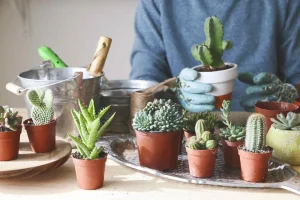
Growing Cacti and Succulents from Seed | Cactus Seeds
Brown Granules – Slow-Release Organic Nutrients
These granules provide a gentle, organic source of nutrition that slowly dissolves over time. They are formulated to supply seedlings with sustained nourishment for more than one year, reducing the need for frequent feeding. These nutrients are also applied during Step 6.
Plant Labels
Labels are included to help track plant varieties and sowing dates. Proper labeling is essential when growing multiple species or varieties at once. The labels on the seed packets are removable and can be transferred directly onto plant markers or the kit for convenient and organized identification.
Germination Medium
This is not traditional soil. Instead, it is a sterile, inert seed-starting medium composed primarily of mineral-based stone materials. It offers excellent water retention while remaining resistant to pests, algae growth, mold, and fungal pathogens, making it ideal for delicate cactus and succulent seedlings.
Sowing Chamber
The sowing chamber is a durable, reusable polypropylene container designed specifically for germination. It is microwave-safe and helps maintain the stable, humid environment necessary for seed sprouting.
Preparing the Germination Medium
Begin by removing all items from the kit except the germination medium. Add approximately 250 ml of sterile water to the container. Alternatively, you may pour tap water over the medium, secure the lid, and microwave the container for five minutes to sterilize both the water and the medium. Once the container has cooled, carefully drain away any excess water.
Do not squeeze or compress the medium in an attempt to remove moisture. The material is engineered to naturally retain an appropriate amount of water. The goal is to achieve an evenly moist environment—not saturated, waterlogged, or dripping wet. Only unabsorbed water should be allowed to drain away.
Gently level and lightly press down the surface of the medium to create an even sowing area.
Sowing the Seeds
Evenly scatter the seeds across the surface of the prepared medium. If the seeds are extremely fine or dust-like, mixing them with a small amount of fine sand inside their packet can help distribute them more evenly.
Do not poke holes or bury the seeds. Cactus and succulent seeds should remain on or just barely pressed into the surface. As a general rule, seeds should never be covered deeper than their own width.
Multiple plant varieties may be grown within a single container if desired. When doing so, clearly label each section and consider adding small plastic dividers to keep varieties separated.
After sowing, lightly mist the surface with sterile water one final time. Secure the lid tightly to create a sealed, high-humidity environment, which is essential for successful germination.
Light, Heat, and Placement
Place the sealed container in a location that receives bright, indirect light. Direct sunlight must be avoided, as young seedlings are extremely sensitive and can easily burn under intense light. Soft, diffused sunlight is ideal.
Artificial grow lights may also be used, although many standard grow lamps may not provide sufficient intensity on their own. Supplementary bottom heat is strongly recommended, as warmth from below significantly improves germination rates.
Maintain a light and heat cycle of approximately 12 to 18 hours per day.
Temperature and Moisture Management
During germination, aim to maintain temperatures between 20–30°C (up to 86°F). Slightly cooler nighttime temperatures are beneficial and help mimic natural conditions. Monitoring temperatures with a thermometer is highly recommended, as excessive heat can quickly damage or kill seedlings.
If the container remains properly sealed, watering should not be necessary during the initial germination period. However, inspect the medium regularly. It must never be allowed to dry out completely. If dryness is observed, mist lightly with sterile water.
Be vigilant for signs of mold, algae, or other pathogens, which thrive in moist environments.
Acclimatization and Nutrient Application
Approximately three months after germination, begin gradually acclimating the seedlings to drier air. This is done by slowly opening the lid over time, increasing ventilation in small increments until the seedlings are no longer sensitive to reduced humidity.
Only once the lid can remain partially open should the trace mineral powder and slow-release organic nutrients be applied to the surface of the medium. These nutrients will support continued growth for at least another year or until transplanting becomes necessary. Both nutrient components are typically supplied together in a single packet.
Germination Timeline and Expectations
Most seeds that are going to germinate will do so within the first month. However, certain species may require several additional weeks. In some cases, seeds may continue to sprout sporadically for up to six months, albeit at a much slower rate. Seeds that fail to germinate initially may still sprout during a second germination cycle.
Transplanting should be delayed as long as possible. Seedlings prefer growing in close groups and often perform better when left undisturbed. Transplanting is usually unnecessary until at least one year after sowing. Patience is essential—rushing the process often results in setbacks or stunted growth. When growing cacti and succulents from seed, minimal intervention typically produces the best results.
It is unrealistic to expect 100% germination. Seed viability varies between batches, and some species naturally germinate more readily than others. Under favorable conditions, a realistic germination range is approximately 35% to 98%.
Stratification and Second Germination Cycle
Some cactus species benefit from stratification, a process that mimics natural environmental cycles. If seeds fail to germinate initially, allow the medium to dry out completely, then repeat the process beginning at Step 6. This drying-and-rewetting cycle can stimulate dormant seeds. Be sure to remove and replant any seedlings that have already germinated before restarting the process.
Common Problems and Solutions
Seedlings appear pale, whitish, stretched, or are falling over
Gradually increase light intensity or extend the duration of light exposure. Healthy seedlings should be compact and firm.
Seedlings turn red or purple
Light levels are too intense. Reduce brightness or shorten exposure time.
Mold, algae growth, or seedling rot is present
Remove contaminants immediately using a sterilized tool. Increase ventilation by opening the lid for several hours daily and improving air circulation.
Seeds fail to germinate
Confirm that temperature and light levels are adequate. Ensure humidity remains above 70%. Check that seeds are not buried too deeply and that the medium is neither overly wet nor completely dry. Bottom heat can greatly improve results.
Additional Notes
Some seed types require specialized care unique to their species. Refer to the online germination guide for detailed instructions on specific varieties.
For extremely small seeds, pre-mixing them with fine sand before sowing is highly recommended to ensure even distribution across the surface of the medium.
With patience, observation, and careful environmental control, growing cacti and succulents from seed can be a deeply rewarding process that produces strong, healthy plants over time.