
Description
Lophophora williamsii Cristata: The Crested Peyote Cactus — History, Symbolism, and Cultivation
Meta Description
Discover Lophophora williamsii Cristata, the rare crested form of the sacred Peyote cactus. Learn about its unique morphology, cultural heritage, conservation value, and expert care for collectors and educators.
Introduction: A Living Desert Sculpture
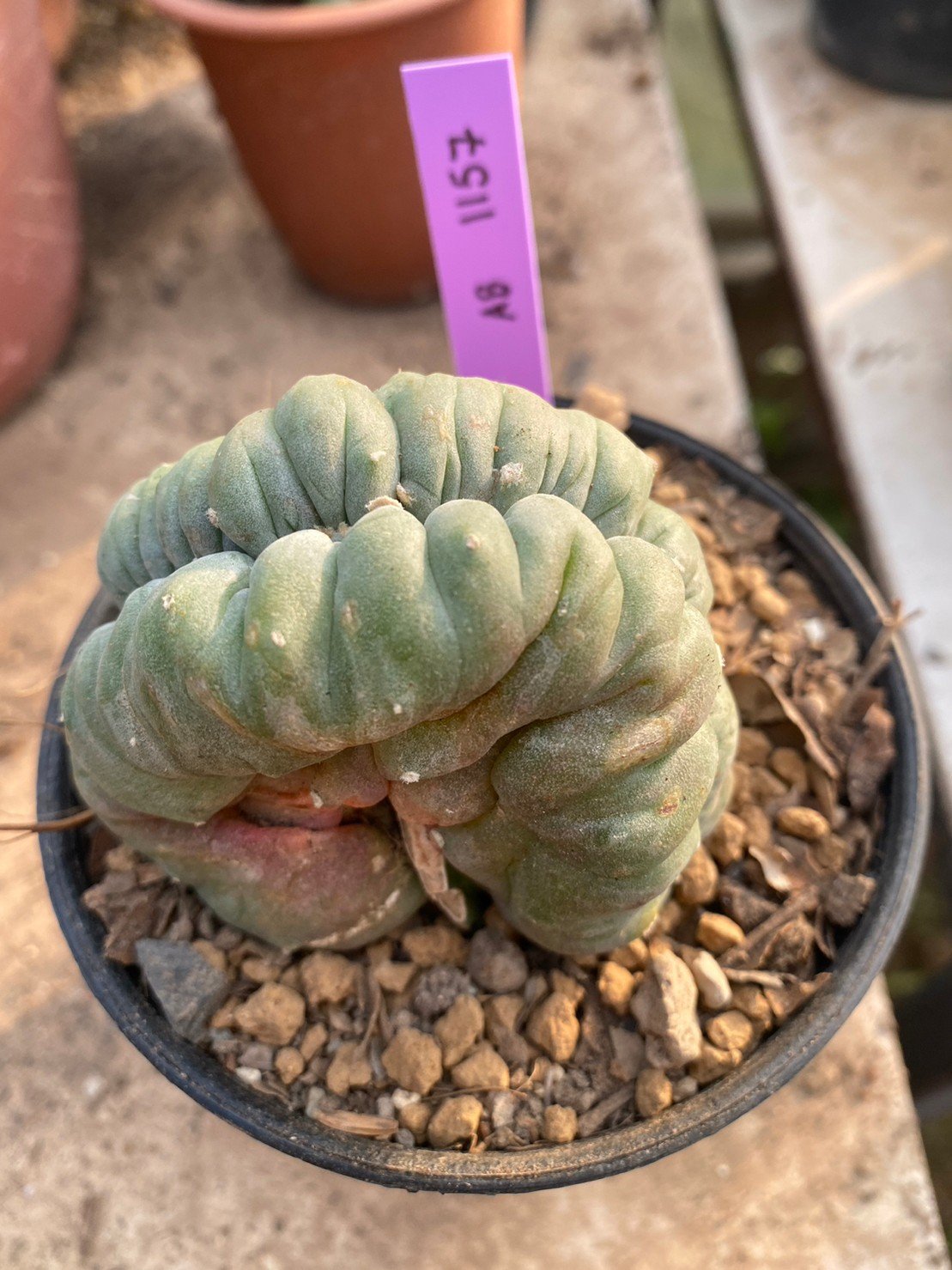
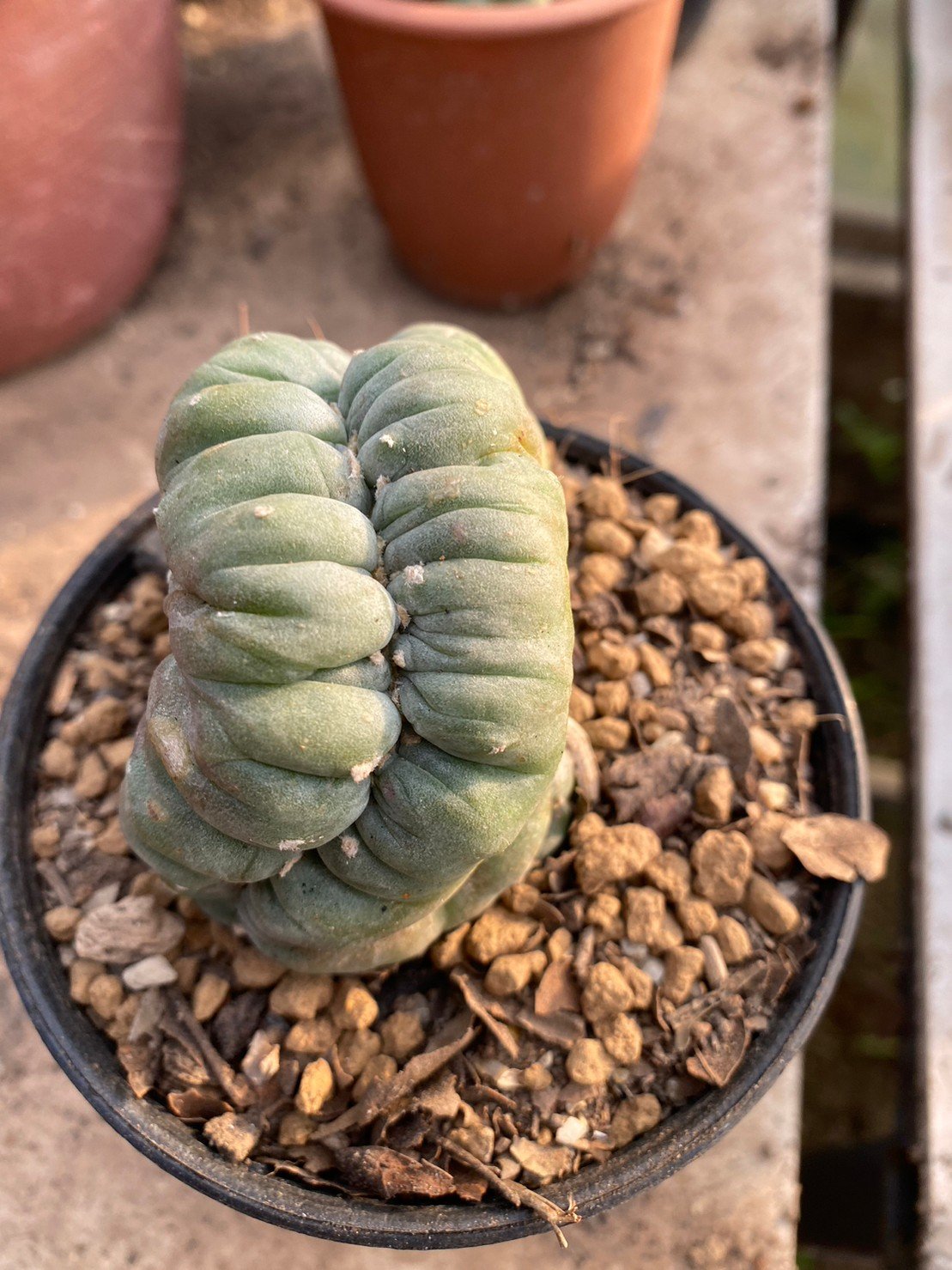
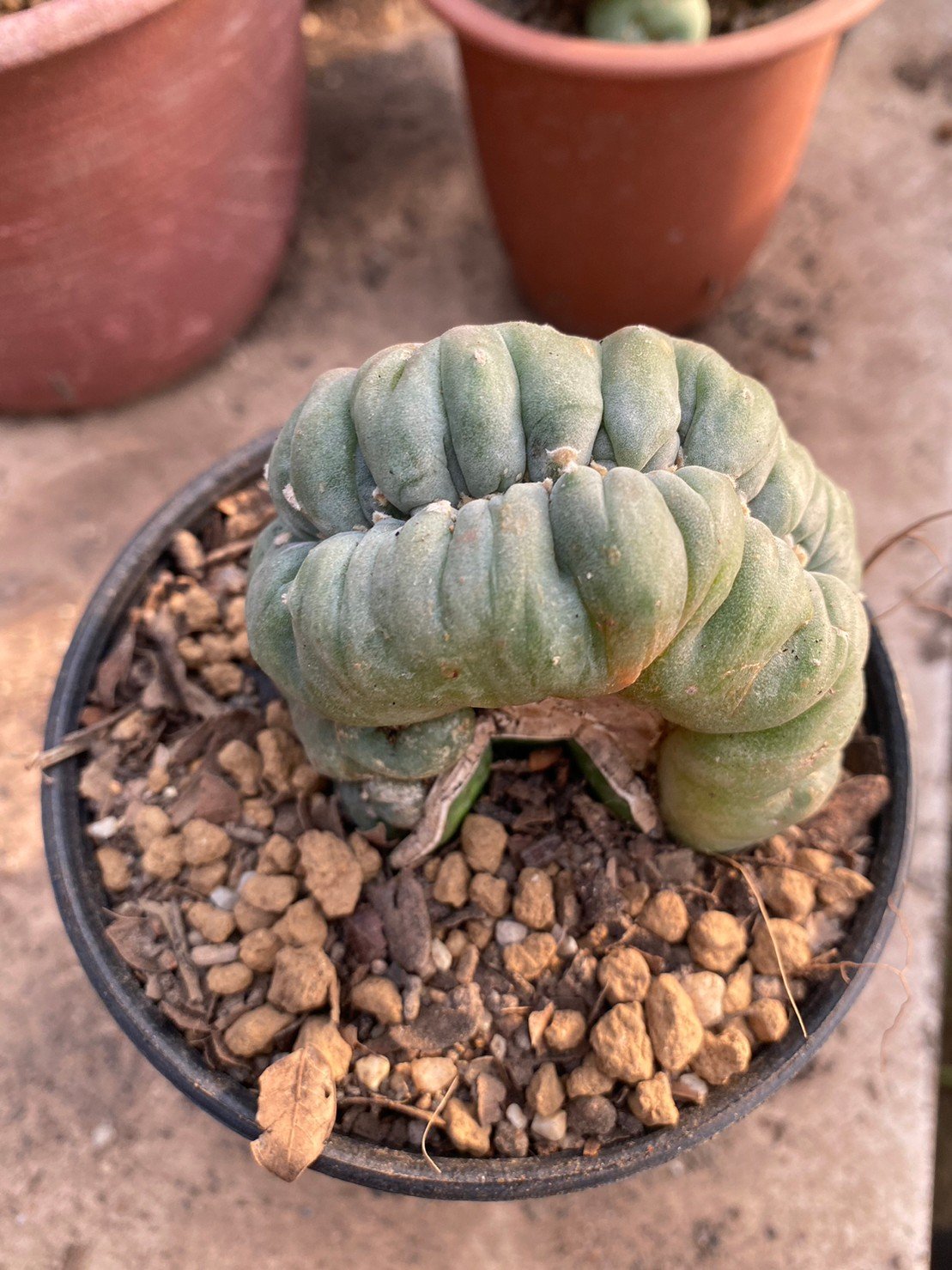
Among the most captivating cacti in the botanical world, the Lophophora williamsii Cristata, commonly known as the Crested Peyote cactus, stands as a living sculpture shaped by nature’s artistry. Its wave-like ridges, fan-like crests, and rhythmic folds create an organic pattern that seems more like art than plant growth.
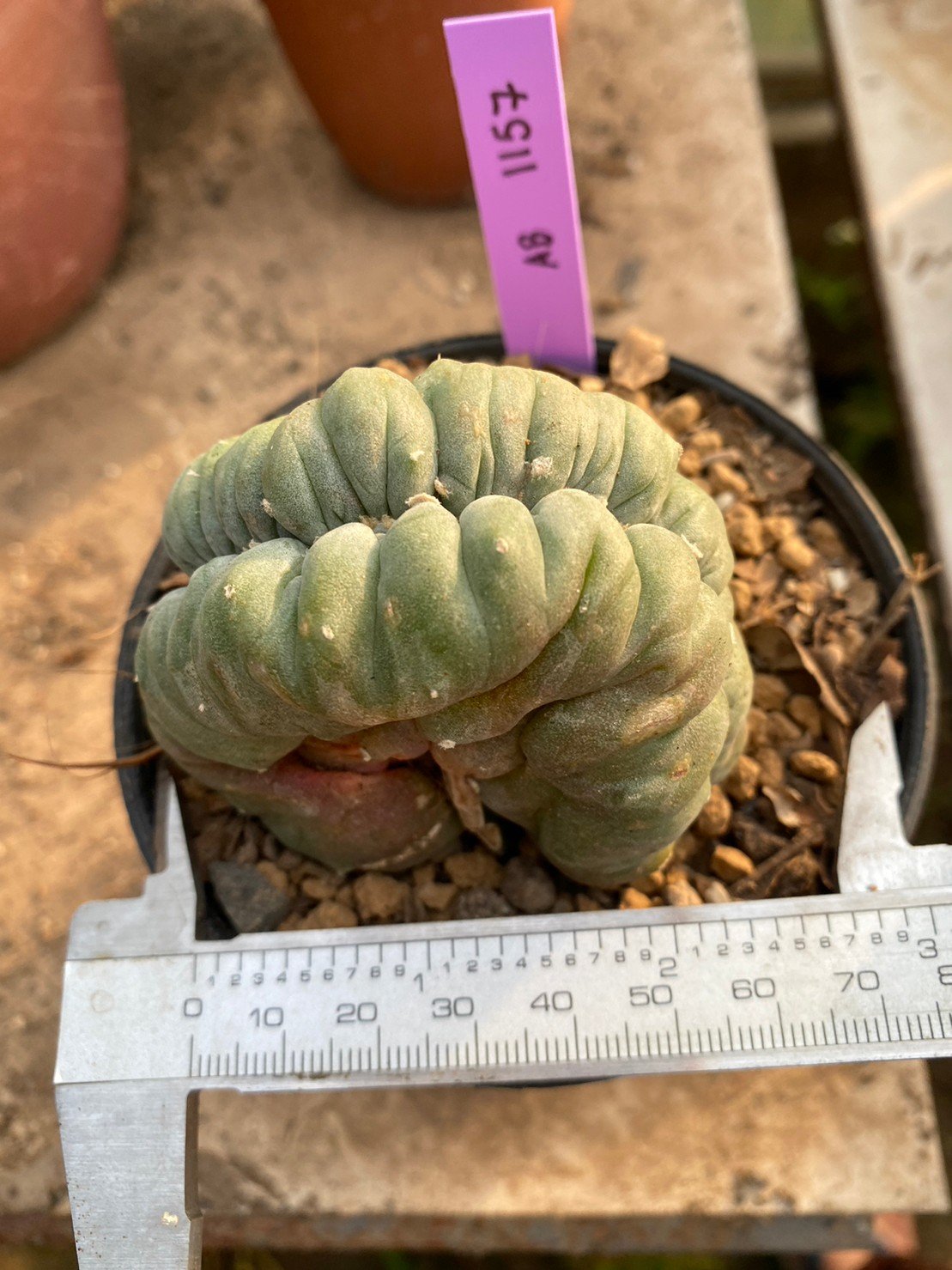
This extraordinary 10 cm, 18-year-old flowering specimen, grown patiently from seed on its own roots, exemplifies the beauty of natural variation. To collectors, ethnobotanists, and horticultural enthusiasts, the Cristata form represents a rare intersection of science, spirituality, and art.
This educational exploration delves into the cactus’s botanical characteristics, historical importance, symbolic meaning, and care, honoring its cultural roots while highlighting its ecological and horticultural significance.
What Is Lophophora williamsii Cristata?
Botanical Identity
-
Scientific name: Lophophora williamsii var. Cristata
-
Common name: Crested Peyote cactus
-
Family: Cactaceae
-
Origin: Chihuahuan Desert (Northern Mexico and southern Texas)
-
Growth habit: Fan-shaped, cresting mutation
-
Size: Mature specimens typically reach 8–12 cm in width
-
Age at maturity: 15–25 years
-
Flowers: Small, pinkish-white, emerging from the plant’s central woolly crown
The Cristata form occurs when the cactus’s main growing point divides irregularly, forming a flattened, wavelike ridge rather than a round “button.” This mutation, known as fasciation, can arise spontaneously and gives the plant its characteristic folded, fan-like appearance.
Each Cristata plant is genetically unique, no two ever share the same shape or rhythm of growth, which contributes to its immense value and intrigue.
The Beauty and Rarity of the Crested Form
The Cristata Peyote’s beauty lies in its structural harmony and unexpected asymmetry. Where typical Peyote cacti grow as symmetrical domes, the Cristata form twists into undulating crests resembling coral reefs or ocean waves.
These shapes make the cactus seem almost sculpted by hand, yet they are entirely natural, the result of rare genetic variation. Collectors often describe Cristata specimens as “living works of art,” combining both mathematical precision and organic flow.
Because the mutation is uncommon and slow-growing, a mature, seed-grown, own-root Cristata plant is a botanical rarity, often taking decades to reach flowering size.
A Historical and Cultural Legacy
Indigenous Reverence
For thousands of years, Lophophora williamsii (Peyote) has held deep cultural significance among Indigenous peoples of northern Mexico and the southwestern United States. In traditional contexts, it has been revered as a symbol of knowledge, resilience, and connection with nature.
Tribes such as the Wixárika (Huichol), Tarahumara, and Cora consider Peyote a sacred plant representing life, guidance, and communion with the spiritual world. Its presence in Indigenous art, ritual symbolism, and oral tradition reflects an enduring relationship between human and plant, one rooted in mutual respect and reverence for nature’s wisdom.
While the Cristata form is not traditionally referenced in ancient records, its unique morphology amplifies Peyote’s symbolic association with transformation, consciousness, and natural beauty.
The Peyote Cactus in Modern Context
Today, Lophophora williamsii continues to inspire interest among botanists, horticulturists, ethnobotanists, and collectors. Beyond its traditional heritage, it represents a case study in rare plant morphology and adaptive desert biology.
Modern cultivation focuses on conservation, education, and sustainable propagation, ensuring that Peyote, once threatened by overharvesting, continues to thrive for generations to come.
The Symbolism of the Crested Peyote
The Cristata form of Peyote holds layered meanings that extend beyond botany. To many plant enthusiasts and students of symbolism, its unusual geometry evokes concepts of transformation, unity, and infinity.
Symbolic Interpretations
-
Crested growth: Symbol of transcendence, breaking the norm to reveal higher forms of balance.
-
Circular waves: Represent cycles of life, death, and renewal.
-
Age and longevity: Reflect patience, endurance, and natural wisdom.
-
Flowering: Symbolizes vitality and maturity, proof of harmony between growth and environment.
Artists and spiritual thinkers often associate the Crested Peyote’s flowing patterns with cosmic order, seeing in it a mirror of the universe’s interconnected design.
The Science of Cresting: A Natural Mutation
The Cristata growth form arises through a biological process known as fasciation, a rare condition that alters how cells divide at the cactus’s apical meristem (growth point).
Instead of producing a single, symmetrical growth tip, the meristem flattens and expands laterally, generating multiple growth points that fan outward in overlapping waves.
This creates the unique ridged structure characteristic of the Cristata Peyote. While fasciation can occur in other cactus species, it is exceptionally beautiful in Lophophora williamsii due to the plant’s naturally smooth surface and lack of spines.
Crested forms are genetically stable once established, but their unpredictable appearance means that no two Cristata Peyotes are ever alike, further enhancing their appeal to collectors.
Seed-Grown Own-Root Plants vs. Grafted Specimens
Grafted Peyote Plants
Grafting Peyote onto faster-growing cacti (such as Myrtillocactus geometrizans or Trichocereus pachanoi) allows for rapid size increase, but it can distort natural growth and lifespan. Grafted plants may lose stability, and their growth pattern often differs from naturally rooted specimens.
Seed-Grown, Own-Root Peyote
By contrast, seed-grown, own-root Cristata Peyote develops slowly and authentically over many years, forming a healthy taproot system identical to wild plants.
Benefits include:
-
Natural development: Mimics wild growth patterns.
-
Longer lifespan: Greater resilience and structural integrity.
-
Authenticity: Grows exactly as nature intended.
-
Spiritual continuity: Reflects patience and reverence in cultivation.
A 10 cm, 18-year-old, seed-grown, flowering Cristata Peyote exemplifies this authenticity, a plant that has matured gracefully over nearly two decades.
Flowering and Maturity
Flowering marks a pivotal stage in the Peyote’s life cycle. Mature Cristata specimens produce small, delicate pinkish-white flowers, often appearing at the crest’s ridges during summer.
The Meaning of Flowering
-
Biological: Indicates full maturity and health.
-
Aesthetic: Adds subtle beauty to the already intricate surface.
-
Symbolic: Represents vitality, renewal, and natural continuity.
For collectors, a flowering Cristata Peyote demonstrates that the plant has reached equilibrium, the point where it not only survives but thrives.
How to Care for Lophophora williamsii Cristata
The Cristata Peyote requires gentle but precise care, mirroring the conditions of its native desert habitat.
Soil
Use a mineral-rich, well-draining cactus mix with coarse sand, pumice, or perlite. Avoid heavy organic content that retains water.
Watering
Water sparingly. Let soil dry completely before rewatering. During winter dormancy, reduce watering to a minimum. Overwatering can cause root rot.
Light
Provide bright, indirect sunlight. The Cristata form, with its flattened shape, can be more sensitive to sunburn than standard Peyote. Filtered light or partial shade is ideal.
Temperature
Optimal range: 18°C–30°C (65°F–86°F). Protect from frost and excessive humidity.
Potting
Use a shallow, wide pot with drainage holes. Peyote prefers horizontal root space rather than deep containers.
Fertilization
Apply diluted cactus fertilizer once monthly during the active growing season (spring–summer). Avoid over-fertilization.
Dormancy Care
In colder months, allow the cactus to rest. Keep it in a dry environment with reduced light and minimal water until warmer weather returns.
Conservation and Ethical Cultivation
Due to habitat loss and unsustainable harvesting, wild Peyote populations have declined in many regions. Responsible cultivation plays a vital role in preserving this culturally and ecologically important species.
Ethical growers focus on:
-
Seed propagation rather than wild collection.
-
Education and research into Peyote’s ecological role.
-
Cultural respect for Indigenous traditions associated with the plant.
By nurturing Peyote in cultivated environments, collectors and botanists help safeguard biodiversity while honoring the species’ long-standing spiritual heritage.
The Role of Peyote in Botanical and Cultural Education
Lophophora williamsii Cristata serves as a valuable teaching tool for those studying:
-
Plant morphology and genetics (fasciation in desert flora).
-
Ethnobotany and traditional knowledge systems.
-
Conservation and sustainable cultivation practices.
Universities, botanical gardens, and cultural educators often use Peyote as a case study in understanding how plants shape human culture and identity.
Why This 18-Year-Old Cristata Peyote Is Special
This 10 cm, 18-year-old, flowering, seed-grown, own-root specimen represents a perfect synthesis of beauty, authenticity, and endurance. Its features make it a keystone example of successful ethical cultivation:
Age and maturity – nearly two decades of growth.
Flowering stage – proof of vitality and balance.
Rare Cristata form – unique, sculptural appearance.
Own-root development – authentic desert physiology.
Cultural resonance – a bridge between heritage and modern horticulture.
Such plants are not only collector’s treasures but also living ambassadors of conservation and respect for natural history.
Conclusion: A Symbol of Time and Transformation
The Lophophora williamsii Cristata stands as a testament to the wonder of natural variation. With its hypnotic folds and serene geometry, it embodies both biological marvel and artistic inspiration.
An 18-year-old flowering, seed-grown Cristata Peyote is a rare reminder of the harmony between patience and purpose. In caring for it, collectors and educators participate in an ancient tradition of reverence, preservation, and learning, one that connects modern science to timeless spirituality.
In the folds of this cactus lies a quiet message: that beauty, endurance, and balance are achieved not through haste, but through time, care, and respect for the living world.
![Peyote [Lophophora Williamsii] 3.5-4.5 cm 8 years old ownroot from seed flowering](https://mr-cactuspeyote.us/wp-content/uploads/2025/10/IMG_6090-300x300.jpeg)

