
Description
Lophophora williamsii cristata — The Rare Crested Peyote: History, Growth, and Cultivation
Meta Description
Explore the fascinating world of Lophophora williamsii cristata, the rare crested Peyote cactus. Learn about its 15-year growth journey, cultural background, natural mutation, and expert care in this educational guide for collectors and enthusiasts.
Introduction: Nature’s Living Sculpture
The Lophophora williamsii cristata,often called the crested Peyote, is one of the most extraordinary expressions of the cactus kingdom.
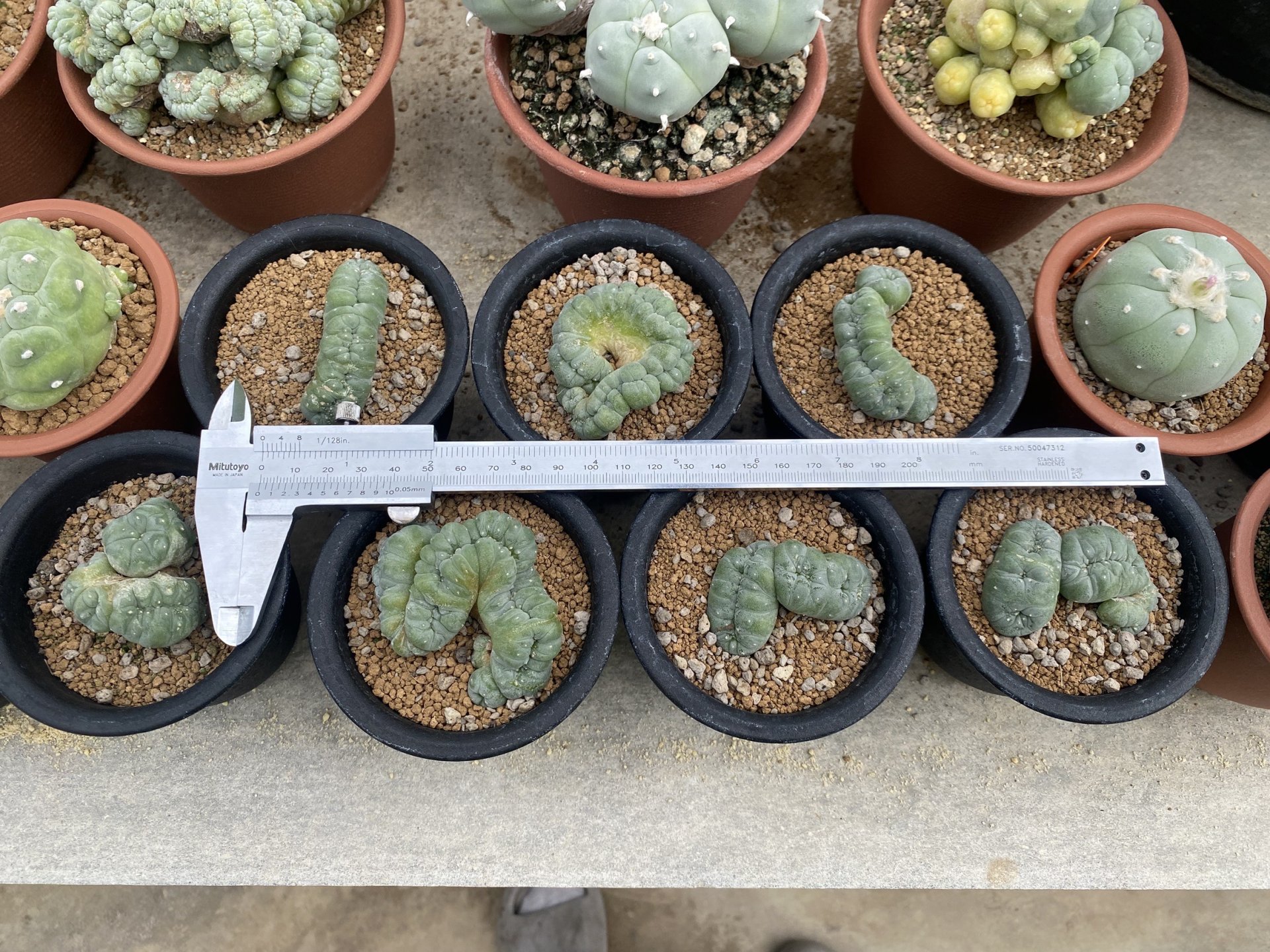
This 5–6 cm, 15-year-old, seed-grown, own-rooted specimen embodies patience, rarity, and natural artistry. Its unusual fan-like crests twist and wave across the plant’s surface, creating patterns that seem sculpted by the desert itself.
For collectors, botanists, and horticultural educators, this plant represents more than beauty: it is a living symbol of adaptation, resilience, and time.
Botanical Overview
Scientific Classification
-
Scientific name: Lophophora williamsii var. cristata
-
Common names: Crested Peyote, Peyote Cristata
-
Family: Cactaceae
-
Native region: Chihuahuan Desert (Northern Mexico and Southern Texas)
-
Growth form: Crested/fasciated, spineless, globular to fan-shaped
-
Mature size: 5–6 cm diameter at 15 years
-
Flower color: Pale pink to white
This crested form originates from the same species as the classic Lophophora williamsii but exhibits a rare fasciated growth mutation, producing elegant ridges and waves instead of symmetrical buttons.
Each cristate specimen is unique in form and pattern, making it an irreplaceable treasure for collectors and researchers alike.
Understanding the Cristate Phenomenon
What Is a Cristate or “Crested” Cactus?
In plant biology, fasciation occurs when the growth point (apical meristem) divides irregularly. Instead of expanding in a circular pattern, the plant’s tissues grow in a line, forming fan-shaped or undulating structures.
This mutation is entirely natural and may result from minor genetic variation or environmental influence. Once it appears, the plant continues to grow in this distinctive manner for life.
Why It’s So Rare
Only a small percentage of Lophophora williamsii ever develop the cristate form, and even fewer grow stably for decades. The rarity lies in both the mutation itself and the slow pace of Peyote’s development.
Every crest, ridge, and curve tells the story of a plant growing against convention, a desert masterpiece shaped by nature’s unpredictability.
Aesthetics and Form: The Art of Nature
The visual appeal of Lophophora williamsii cristata lies in its symmetry within irregularity. The plant forms intricate folds that resemble waves, coral reefs, or sculpted landscapes.
Key Visual Traits
-
Texture: Smooth, waxy skin with fine woolly tufts in areoles.
-
Color: Bluish-green to sage tones that deepen with age.
-
Form: Undulating, fan-like crests arranged in spirals or ridges.
-
Flowering: Small, delicate blooms emerge from the central line or crest during maturity.
To observers, the cristate Peyote is both plant and artwork, a convergence of biology and geometry, embodying the patience of desert evolution.
The Journey of a 15-Year-Old, Seed-Grown Specimen
Growing Lophophora williamsii cristata from seed to a 5–6 cm, flowering, own-rooted plant takes over a decade of meticulous care.
Why Seed-Grown Matters
Seed-grown plants, unlike grafted ones, follow a natural developmental rhythm. They build strong root systems and express authentic forms of the species. Grafted Peyotes grow faster but often lose the natural resilience that defines the plant’s true nature.
The Significance of 15 Years
Fifteen years of growth mean this plant has survived seasonal cycles, adjusted to soil and light changes, and developed a stable cresting pattern.
For educators and collectors, it represents the culmination of long-term dedication and sustainable horticulture.
Cultural and Historical Context
Indigenous Roots and Reverence
Lophophora williamsii holds profound cultural significance among Indigenous peoples of northern Mexico and the southwestern United States. For centuries, it has symbolized endurance, balance, and connection with the natural world.
While the cristate form itself is a horticultural rarity, it descends from the same lineage revered in traditional worldviews that honor desert plants as spiritual allies and ecological teachers.
Modern Appreciation
Today, the Peyote Cristata attracts interest from collectors, botanists, and conservationists for its exceptional morphology. Beyond its cultural importance, it serves as a case study in plant adaptation and biodiversity, inspiring both scientific curiosity and artistic admiration.
Flowering and Reproduction
Flowering in Lophophora williamsii cristata indicates both maturity and stability.
The small pinkish-white flowers bloom near the crest’s center, producing tiny seed pods that continue the lineage when pollinated.
Flowering Details
-
Season: Typically spring to late summer.
-
Duration: Blooms last several days, recurring periodically.
-
Pollination: May self-pollinate or require cross-pollination from nearby plants.
-
Seed formation: Small, dark seeds stored within the fruit.
Each bloom is a celebration of balance, a moment when decades of slow growth result in renewal and continuity.
Cultivation and Care Guide
Though slow-growing, Lophophora williamsii cristata is resilient when properly maintained.
Soil Composition
Use a gritty, mineral-rich cactus substrate blended with pumice, perlite, or coarse sand. Avoid high-organic soils, which retain moisture.
Watering Schedule
Water sparingly during the growing season. Always allow soil to dry completely before the next watering. In winter, reduce watering drastically or keep dry.
Light and Placement
Provide bright but filtered sunlight. Direct midday rays can scorch the delicate crests. Ideal conditions include morning or late-afternoon sun.
Temperature Range
Maintain a warm, arid environment between 18 °C and 30 °C (65 °F–86 °F). Protect from frost and humidity.
Container and Repotting
Use shallow terracotta or clay pots with drainage holes. Repot every few years to refresh soil and assess root health.
Feeding
During the active growth season, apply a diluted cactus fertilizer every 4–6 weeks. Stop feeding in dormancy periods.
With these conditions, a cristate Peyote can thrive for several decades, slowly expanding its sculptural form.
Ethical Cultivation and Conservation
Because wild Lophophora species face threats from overcollection and habitat degradation, it is vital to support seed-grown, legally cultivated specimens.
Principles of Sustainable Cultivation
-
Propagate from seed rather than collecting from the wild.
-
Buy from verified, ethical growers who focus on conservation.
-
Share seeds or offsets responsibly to encourage sustainable collections.
-
Educate others about the ecological and cultural value of desert flora.
By cultivating responsibly, growers help protect both biodiversity and cultural heritage.
The Symbolism of the Cristate Form
The cristate Peyote’s irregular beauty often serves as a metaphor for growth through imperfection. Its crested lines suggest motion, transformation, and harmony amid chaos.
In art and education, it stands as a symbol of:
-
Adaptation: Thriving through mutation and environmental change.
-
Individuality: No two specimens are alike.
-
Resilience: Slow yet enduring growth in challenging environments.
-
Patience: A living example of time’s creative power.
These traits make it not only a botanical wonder but also a philosophical emblem of nature’s capacity for innovation.
The Role of Peyote Cristata in Education and Research
Botanical gardens and research institutions value cristate Peyotes as teaching specimens for understanding:
-
Plant morphogenesis and fasciation (abnormal growth).
-
Desert ecosystem adaptation.
-
Genetic variation within slow-growing species.
-
Ethnobotanical relationships between humans and plants.
As more collectors and educators cultivate seed-grown plants, Lophophora williamsii cristata continues to contribute to both science and cultural understanding.
Why This 15-Year-Old Specimen Is Exceptional
Rare cristate mutation — an uncommon form of Lophophora williamsii.
Seed-grown and own-rooted — authentic, sustainable cultivation.
Flowering stage — biological maturity and vitality.
Age and patience — fifteen years of natural growth.
Conservation value — supports ethical horticulture and biodiversity education.
Aesthetic uniqueness — one-of-a-kind natural sculpture.
For collectors and students of botany alike, this cactus represents the union of time, science, and art.
Conclusion: A Living Symbol of Harmony
The Lophophora williamsii cristata reminds us that beauty in nature is rarely symmetrical.
Its crested form captures the elegance of imperfection, and its 15-year life story demonstrates how patience and care yield lasting rewards.
In cultivating or studying such a specimen, we witness the intersection of biology, artistry, and respect for natural balance.
This plant is not just a rare cactus, it is a living embodiment of adaptation, time, and creative evolution.
![Peyote [Lophophora Williamsii] 7-8 cm 18 years old seed ownroot flower seedling](https://mr-cactuspeyote.us/wp-content/uploads/2025/10/IMG_6093-300x300.jpeg)
![Peyote [Lophophora Williamsii] Mature seedlings](https://mr-cactuspeyote.us/wp-content/uploads/2025/10/IMG_6092-300x300.jpeg)
