
Description
Peyote (Lophophora williamsii Cristata): Sacred Crested Cactus – 25 Years of Natural Growth
Introduction to Peyote (Lophophora williamsii Cristata)
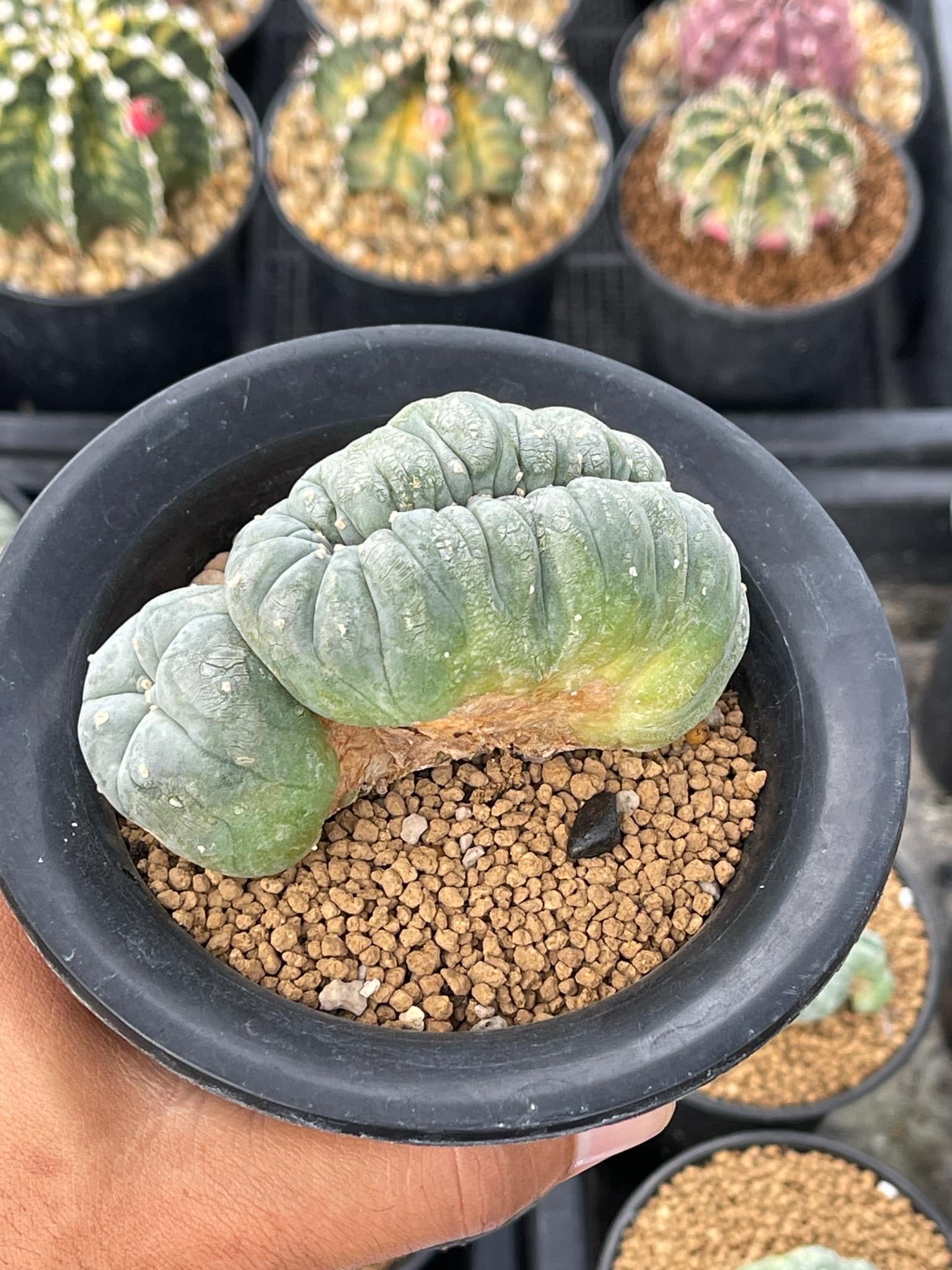
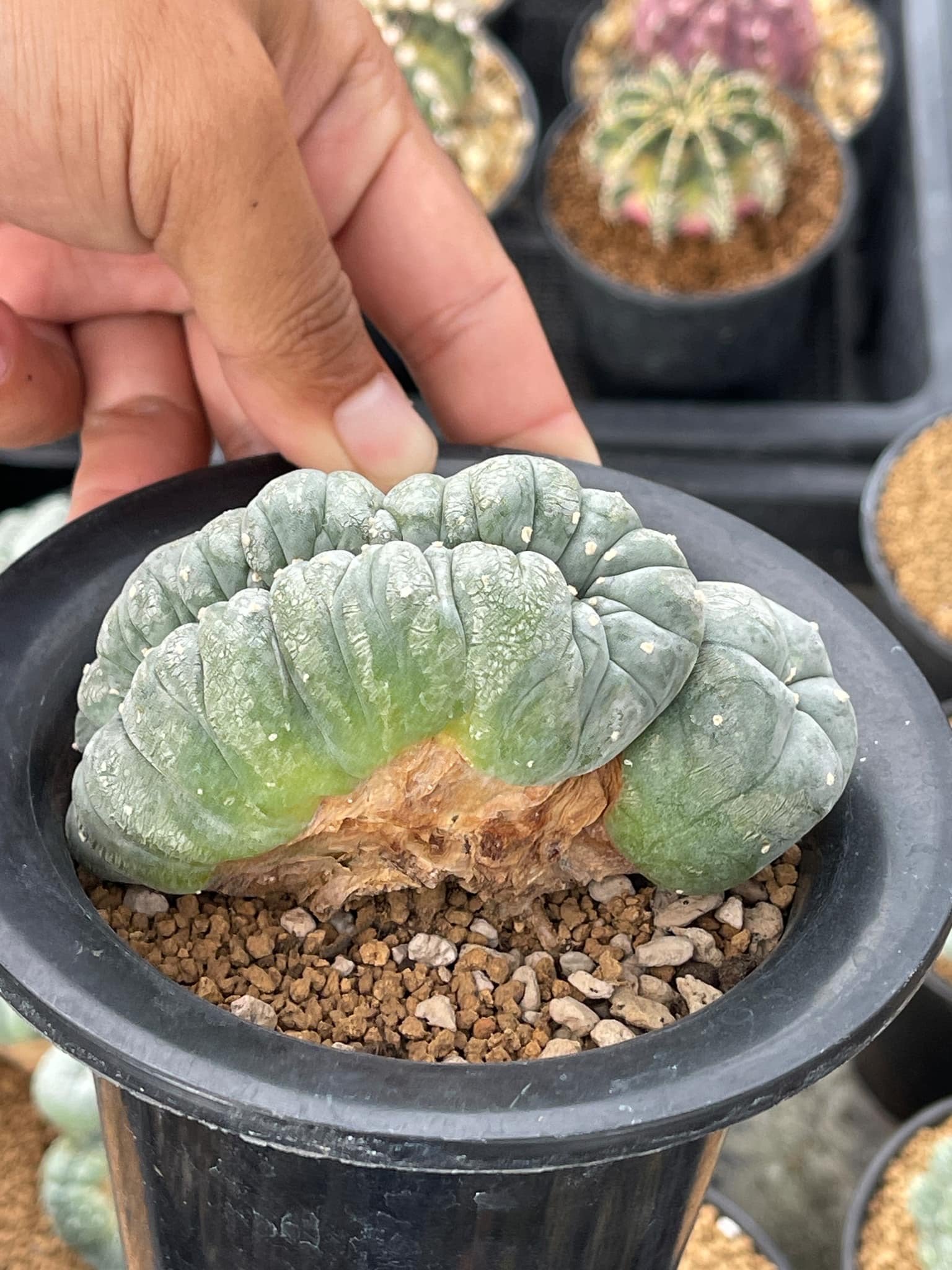
Peyote (Lophophora williamsii Cristata) is one of the most extraordinary and symbolic cacti in the botanical world. Known for its distinct crested growth, this slow-growing succulent stands as a masterpiece of nature’s artistry. Measuring approximately 11–12 cm in diameter and aged around 25 years, it represents not only decades of natural development but also centuries of cultural reverence and ecological importance.
This plant belongs to the Cactaceae family and is native to desert regions of northern Mexico and southwestern Texas, thriving in dry, rocky environments where it has evolved remarkable adaptations for survival.
The Rare Crested (Cristata) Form
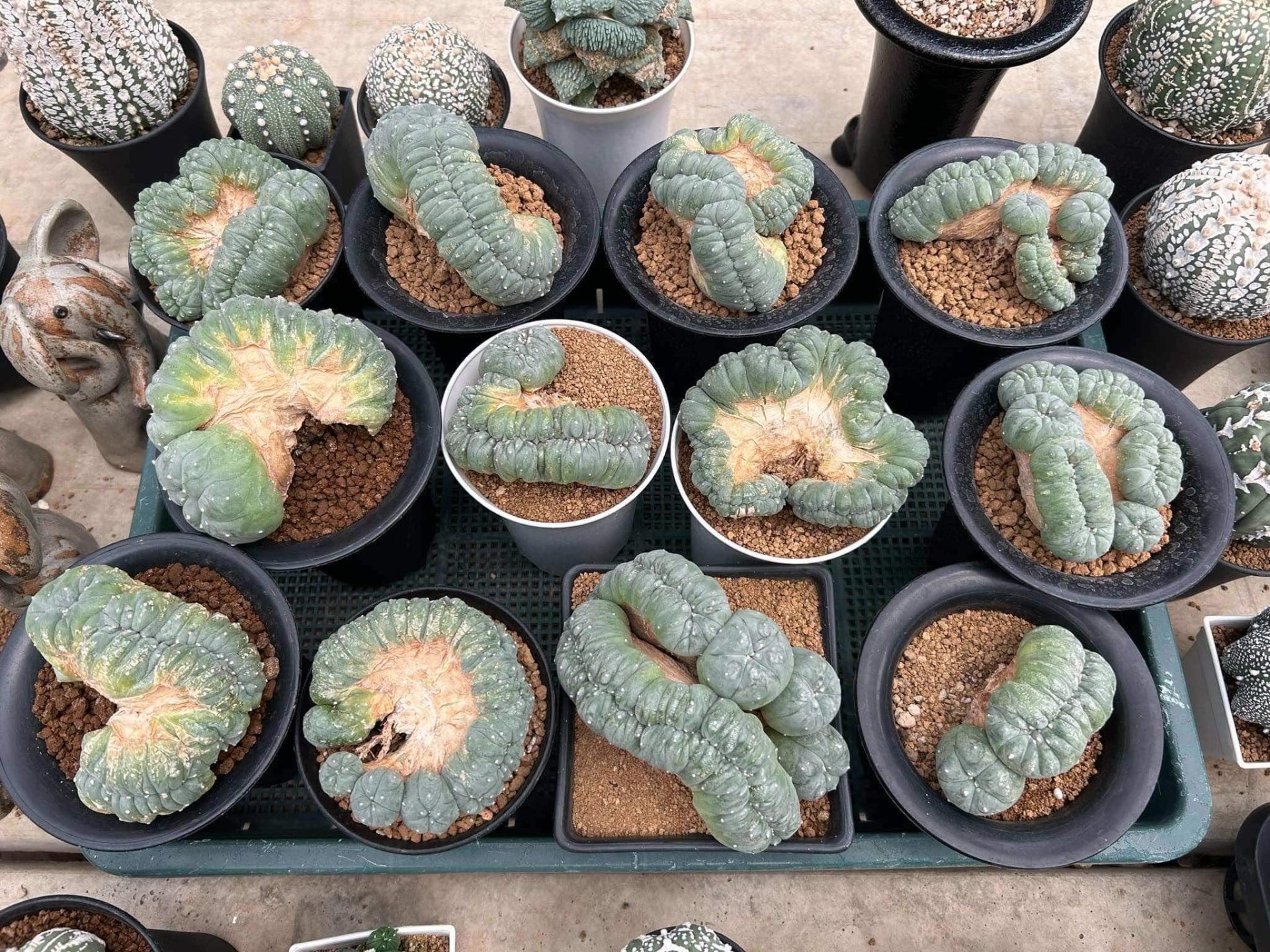
The Cristata form of Peyote is an exceptional morphological variation in which the cactus grows in fan-shaped, undulating waves rather than a simple globular form. Each specimen develops a completely unique crest pattern, no two are ever alike.
Collectors and horticultural enthusiasts cherish these forms for their sculptural beauty, ornamental rarity, and the symbolism of expansion, transformation, and spiritual growth that the crest embodies.
Because this specimen is seed-grown on its own root, not grafted, it reflects a natural, stable growth process that has been maintained for over two decades, a remarkable feat in cactus cultivation.
Cultivation, Growth, and Botanical Care
Peyote (Lophophora williamsii) is a slow-growing cactus that demands patience, precision, and respect. Over 25 years, it forms a thickened base and a dense, woolly crown that may eventually bloom with small, delicate pink or white flowers.
The flowering stage is a significant milestone for collectors and researchers because it enables the cactus to produce seeds, ensuring genetic continuity and biodiversity preservation.
Optimal Cultivation Conditions:
-
Light: Prefers bright but indirect sunlight; filtered light helps maintain even growth.
-
Soil: Well-draining mineral substrate, typically a mix of pumice, sand, and limestone grit.
-
Water: Minimal watering during growing seasons; must dry completely between waterings.
-
Temperature: Thrives in warm, arid environments between 20–35°C (68–95°F).
-
Propagation: Best cultivated from seed to maintain natural morphology and lineage.
Proper cultivation preserves the ecological integrity of Lophophora williamsii and reduces pressure on wild populations, a crucial step in sustainable cactus conservation.
Cultural and Historical Significance
For thousands of years, Peyote has held deep cultural meaning among Indigenous peoples of North America, particularly the Huichol (Wixarika), Tarahumara, and Native American Church members. Traditionally, the cactus is seen as a sacred plant ally, representing healing, guidance, and spiritual connection.
In ceremonial contexts, Peyote has been honored as a symbol of life, vision, and unity with nature, a perspective still respected in many Indigenous traditions today.
From an educational standpoint, Peyote offers valuable insight into the intersection of ethnobotany, spirituality, and ecological stewardship, teaching how humans and plants share reciprocal relationships rooted in respect and sustainability.
Conservation and Ethical Cultivation
Because of overharvesting and habitat loss, wild Peyote populations are declining, making ethical cultivation and seed propagation vitally important. Seed-grown, own-root specimens like this one play a key role in:
-
Preserving genetic diversity
-
Reducing the impact on wild ecosystems
-
Supporting educational and research initiatives
-
Raising awareness of endangered desert flora
Educational programs and botanical gardens emphasize Lophophora williamsii Cristata as a model for sustainable horticulture and environmental ethics.
Key Botanical Features
| Feature | Description |
|---|---|
| Scientific Name | Lophophora williamsii var. Cristata |
| Common Name | Crested Peyote Cactus |
| Family | Cactaceae |
| Age | Approximately 25 years |
| Size | 11–12 cm diameter |
| Growth Type | Seed-grown, own root |
| Form | Crested (Cristata) |
| Flowering | Capable of blooming under proper care |
| Conservation Value | High; encourages ethical propagation |
Symbolism and Educational Importance
The crested Peyote form symbolizes transformation, resilience, and creative evolution, a living metaphor for how life adapts and unfolds in unexpected ways.
In educational and botanical contexts, it offers lessons in:
-
Biodiversity preservation
-
Cultural heritage studies
-
Sustainable horticulture
-
Plant adaptation and morphology
Universities, collectors, and conservationists regard the crested Peyote as a living artifact of natural design and human history.
Conclusion
The Peyote (Lophophora williamsii Cristata) stands at the crossroads of botany, culture, and spirituality, a living sculpture that embodies both science and symbolism.
Its rare crested growth, seed-grown heritage, and 25-year maturity make it one of the most remarkable examples of sustainable cactus cultivation and natural artistry.
For educational institutions, botanical collectors, and conservation advocates, this extraordinary cactus represents a bridge between ancient wisdom and modern ecological responsibility, a plant that teaches patience, reverence, and respect for all living forms.


