![Peyote [Lophophora Williamsii] Mature seedlings](https://mr-cactuspeyote.us/wp-content/uploads/2025/10/IMG_6092.jpeg)
Description
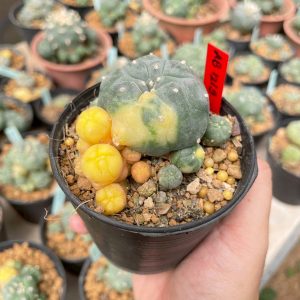
Lophophora williamsii – Mature Seed-Grown Own-Root Cactus: Sacred Desert Heritage in Living Form
Meta Title
Lophophora williamsii Mature Seedlings – Rare Seed-Grown Own-Root Cactus | Educational Guide & Cultivation
Meta Description
Discover rare, mature Lophophora williamsii seedlings, seed-grown, flowering, and own-rooted. Learn about their cultural heritage, desert adaptation, and ethical cultivation in this complete botanical guide.
Introduction – The Living Patience of the Desert
Few plants symbolize endurance, balance, and sacred tradition like Lophophora williamsii.
This extraordinary cactus, round, spineless, and soft-skinned, has captivated botanists, horticulturalists, and collectors for centuries. Our mature seedlings, cultivated naturally from seed and rooted in their own substrate, embody the authentic rhythm of desert growth.
After years of deliberate care, these 3.5–5 cm plants reach flowering maturity. Their subtle pinkish blooms announce the arrival of a new generation, continuing one of the oldest plant lineages on Earth.
Each specimen represents not only horticultural patience but also cultural continuity, a living emblem of the deserts of northern Mexico and the southwestern United States.
Botanical Identity
| Scientific Name | Lophophora williamsii |
|---|---|
| Family | Cactaceae |
| Native Habitat | Chihuahuan Desert regions of Mexico and Texas |
| Growth Form | Globular, spineless cactus with woolly crown |
| Age | Mature (typically 8 – 12 years) |
| Flowering | Pink to white blooms during warm months |
This cactus remains one of the few species within its genus known for its slow and steady development, often requiring a decade or more to flower naturally when seed-grown.
The Meaning of Seed-Grown Authenticity
Why Seed-Grown Matters
Unlike grafted specimens that develop rapidly on foreign rootstocks, seed-grown plants follow the species’ natural timeline. They build dense root systems, maintain compact bodies, and express genetic variations that reflect the subtle diversity of wild populations.
This authenticity matters to collectors, educators, and conservationists alike.
Every seedling tells a story of resilience, an unbroken chain of growth that mirrors the rhythm of its native desert environment.
Own-Root Development
Rooting the plant on its own base ensures stability and long life. Over time, this produces a self-reliant cactus capable of surviving in drier, leaner soil with minimal intervention.
Cultural and Historical Significance
For thousands of years, Lophophora williamsii has appeared in art, folklore, and spiritual symbolism throughout northern Mexico. It is celebrated as a plant of wisdom and endurance, representing the delicate relationship between humans and arid landscapes.
Traditional narratives often describe the cactus as a reminder of balance, thriving without spines, surviving without excess, embodying quiet strength.
Today, educational institutions and botanical gardens showcase Lophophora not only for its beauty but also for its role in understanding the ecological and cultural identity of desert regions.
Morphology and Growth Characteristics
Structure
The mature Lophophora williamsii forms a soft, rounded body divided into shallow ribs. Each rib is topped with a tuft of white woolly hair that protects the crown and aids moisture retention.
Color and Texture
The skin ranges from blue-green to grey-green, depending on sunlight and soil mineral content. Under strong indirect light, it develops a faint silvery hue, prized by collectors.
Flowering
Once the plant reaches 8–10 years, small star-shaped flowers appear at the crown’s center. These delicate blossoms, ranging from pale pink to nearly white, often bloom for just a few days yet symbolize vitality and regeneration.
After pollination, the plant may produce small seed pods, the foundation for sustainable propagation.
Flowering as a Symbol of Renewal
In botanical and cultural symbolism alike, flowering marks maturity.
For the grower, the appearance of blooms on a seed-grown Lophophora is the reward for years of patience.
Each flower represents renewal, continuity, and the timeless dialogue between soil, sun, and life.
The seeds that follow allow the cycle to begin again, ensuring the preservation of this desert species through ethical cultivation rather than wild collection.
Ethical Cultivation and Conservation
Wild Lophophora williamsii populations are increasingly rare due to habitat loss and overharvesting.
Modern horticulture encourages propagation through seeds and controlled greenhouses, allowing enthusiasts to enjoy the species without disturbing natural ecosystems.
Guidelines for Responsible Cultivation
-
Source ethically: Always obtain plants or seeds from verified growers.
-
Grow sustainably: Reuse seed stock from cultivated specimens.
-
Educate others: Share knowledge about conservation and slow-growth cultivation.
-
Protect habitats: Support organizations preserving native cactus ecosystems.
By following these principles, each collector becomes part of a global effort to ensure that Lophophora williamsii remains a living link between past and future.
Care Guide for Mature Lophophora williamsii Seedlings
Although Lophophora grows slowly, it is remarkably hardy when given the right environment.
Soil
Use a mineral-rich, free-draining mix, two parts coarse sand or pumice to one part cactus compost. Avoid moisture-retentive organic matter.
Watering
Water sparingly during the growing season (spring through early autumn). Always allow soil to dry fully between waterings. During winter rest, reduce watering to minimal or none.
Light
Bright, indirect sunlight is best. Outdoors, provide filtered light to prevent scorching. Indoors, a south-facing window with light diffusion is ideal.
Temperature
Optimal range: 18 – 30 °C (65 – 86 °F). Protect from frost; cold drafts can damage the crown tissue.
Container
Choose shallow clay or terracotta pots with ample drainage. The natural porosity supports airflow and prevents root rot.
Fertilizer
Feed once per season with a diluted low-nitrogen cactus fertilizer to encourage strong root and tissue development.
The Collector’s Perspective
Why Collectors Cherish Mature Seedlings
Because growth is slow and unpredictable, mature Lophophora plants are seldom available. Their combination of natural symmetry, age, and flowering maturity makes them valuable centerpieces in rare cactus collections.
Collectors often view them as living timepieces, each rib, fold, and flower marking years of survival and care.
Educational and Decorative Value
Beyond private collections, these plants appear in universities, museums, and botanical conservatories as part of exhibits on desert ecology and cultural history. Their understated form contrasts dramatically with spiny species, symbolizing adaptation through stillness rather than defense.
Comparison: Seed-Grown vs. Grafted Specimens
| Feature | Seed-Grown Own-Root | Grafted Specimens |
|---|---|---|
| Growth Speed | Natural, very slow | Rapid due to host rootstock |
| Authenticity | True to species genetics | Influenced by host cactus |
| Longevity | Often decades | Typically shorter lifespan |
| Aesthetic | Compact, authentic form | May appear elongated |
| Cultural Value | Reflects natural growth and purity | Considered horticultural hybridization |
For purists, the patience of cultivating from seed is its own reward, every millimeter of growth earned through time and care.
Encouraging Flowering and Seed Production
To witness Lophophora williamsii in bloom, consistency is key.
Provide stable warmth, light, and seasonal rest periods. The plant tends to flower after several consecutive years of healthy growth.
Tips:
-
Keep nighttime temperatures slightly cooler in spring to stimulate buds.
-
Avoid moving the cactus during the budding phase.
-
If pollinated, small fruit pods will form, collect seeds carefully once dry.
By propagating from these seeds, you preserve the lineage of ethically cultivated plants for future generations.
Educational Significance and Botanical Research
Lophophora williamsii contributes to several fields of study:
-
Botany and taxonomy – understanding spineless cactus evolution.
-
Ecology – adaptation to arid, calcareous environments.
-
Ethnobotany – documenting cultural relationships between humans and desert flora.
-
Conservation science – sustainable cultivation as a protection strategy.
Many universities maintain seed banks of Lophophora species for long-term genetic preservation.
Distinct Qualities of Mature Seed-Grown Own-Root Plants
-
Age & Maturity: 8–12 years of natural growth.
-
Flowering Capability: Ready to bloom under proper care.
-
Origin: Ethically propagated from seed.
-
Structure: Compact, spineless, and stable on its own roots.
-
Longevity: Can thrive for decades with minimal intervention.
-
Cultural Relevance: Symbol of patience, balance, and desert adaptation.
These qualities make each plant an heirloom, not only in horticultural terms but also in educational and cultural storytelling.
Integrating Lophophora williamsii into Collections
When displayed with other succulents, Lophophora adds an aesthetic calmness, its smooth surface contrasts beautifully with spiny companions like Ferocactus or Ariocarpus.
Use neutral-toned sand top-dressing to emphasize its natural desert appearance.
In educational settings, mature seedlings are ideal for teaching about drought adaptation, CAM photosynthesis, and sustainable desert gardening.
Frequently Asked Questions
How long does it take for a seed-grown Lophophora to flower?
Typically 8–10 years, depending on light, temperature, and soil conditions.
Can it survive indoors?
Yes, provided there is bright indirect light and low humidity. Many collectors grow them successfully on sunny windowsills.
How long can it live?
Under good care, several decades, some specimens exceed 40 years in cultivation.
Why is ethical sourcing important?
Wild populations are declining. Supporting cultivated, seed-grown plants protects natural habitats and biodiversity.
Conclusion – The Legacy of a Living Desert Jewel
The mature, seed-grown Lophophora williamsii embodies everything that makes desert flora extraordinary: resilience, balance, and silent endurance.
Each flowering specimen is a quiet masterpiece, the result of years of observation, patience, and respect for natural rhythm.
For collectors and educators, caring for this cactus is more than horticulture; it is participation in a centuries-long dialogue between human culture and the living desert.
Owning such a plant means preserving both a biological lineage and an ancient story, one that continues to bloom, softly and persistently, under the same sun that shaped it millennia ago.
![Peyote [Lophophora Williamsii] 7-8 cm 18 years old seed ownroot flower seedling](https://mr-cactuspeyote.us/wp-content/uploads/2025/10/IMG_6093-300x300.jpeg)