
Description
Lophophora williamsii Cristata – 25 Years of Rare Crested Desert Growth
Meta Title
Lophophora williamsii Cristata – 25-Year-Old Rare Crested Peyote | Botanical Heritage & Conservation Guide
Meta Description
Explore the 25-year-old Lophophora williamsii Cristata, a rare crested cactus celebrated for its sculptural growth, cultural legacy, and ethical cultivation. Learn its morphology, care, and conservation value in this educational guide.
Introduction – A Quarter-Century of Living Desert Art
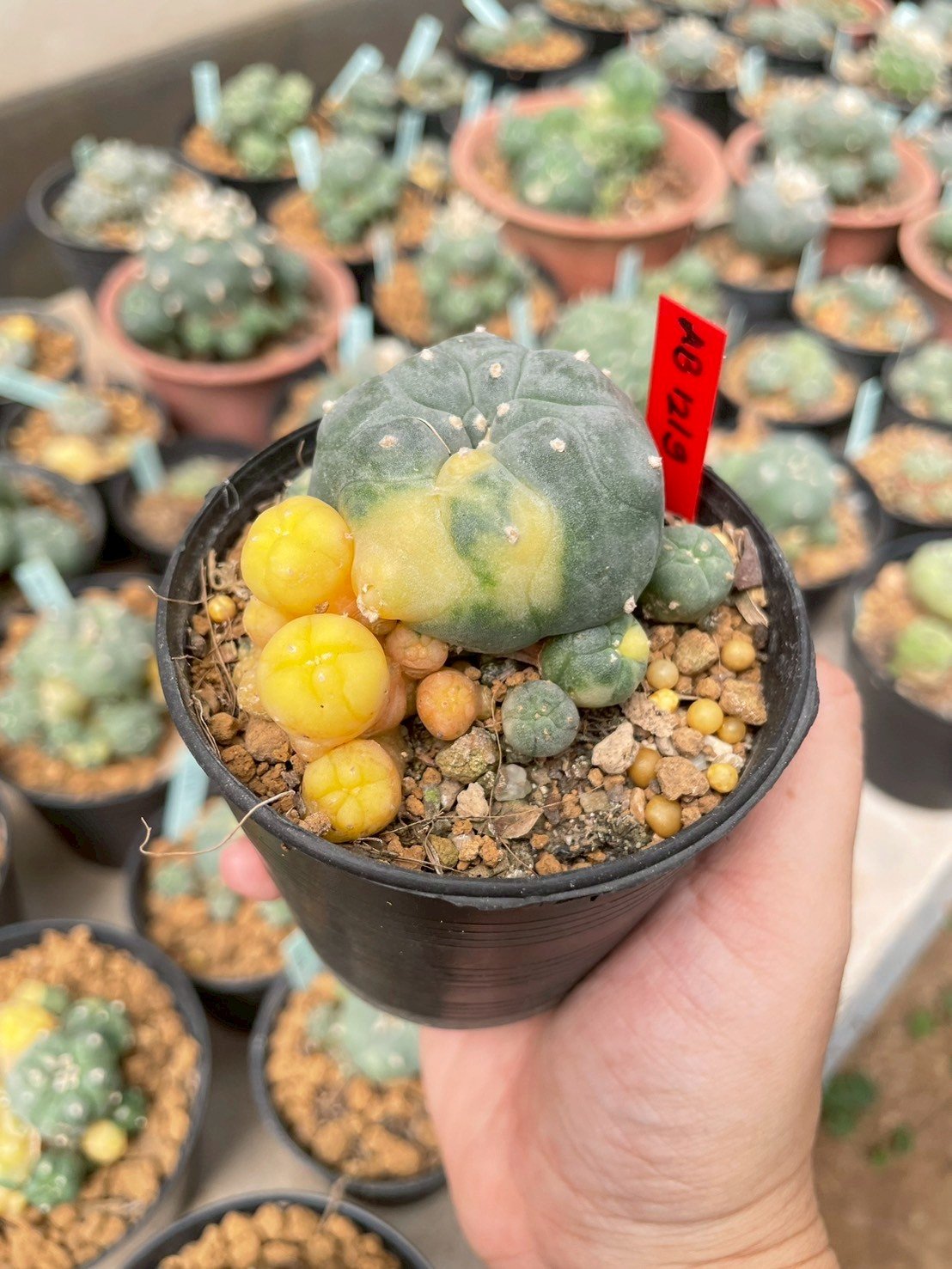
The Lophophora williamsii Cristata stands among the most extraordinary examples of crested growth in the cactus world. Over 25 years, this seed-grown, own-root specimen has transformed into a graceful fan of ripples and folds, a living sculpture shaped by patience and the desert’s rhythm.
Its crested form, known as cristate, is both rare and mesmerizing, symbolizing endurance and harmony with nature’s slow creative forces. For botanists, horticulturists, and collectors, such a mature specimen is not merely a plant but a record of time and adaptation.
Botanical Overview
| Scientific Name | Lophophora williamsii Cristata |
|---|---|
| Family | Cactaceae |
| Common Names | Crested Peyote, Cristata Lophophora |
| Growth Form | Crested (cristate mutation forming fan-like waves) |
| Age | 25 years |
| Size | 7 – 8 cm mature diameter |
| Native Range | Chihuahuan Desert, Northern Mexico & Southern Texas |
| Root Type | Taprooted, own-root (not grafted) |
| Flowers | Small white-to-pink blooms in summer |
This plant’s unique form originates from a natural process called fasciation, in which the growing tip expands laterally instead of vertically, producing dramatic, ribbon-like crests.
Understanding Cristate Growth
The Science Behind Fasciation
Fasciation is an unusual yet naturally occurring mutation in which a cactus’s apical meristem, its main growth point, broadens and multiplies. Rather than growing into round “buttons,” the plant fans outward, creating a wave-patterned ridge that evolves differently each season.
A Rarity in Nature
Only a tiny percentage of Lophophora williamsii ever develop the cristate form spontaneously. When they do, the resulting shapes are impossible to predict, some resemble coral reefs, others twisting ribbons of green and silver. Over twenty-five years, this specimen has achieved complete structural stability, an accomplishment few desert plants reach.
Visual and Structural Characteristics
-
Color: Bluish-green to muted gray-green, often with subtle marbling.
-
Surface: Smooth, velvety, and slightly woolly around the areoles.
-
Form: Expansive crests that fold back on themselves like natural waves.
-
Areoles & Flowers: Small tufts of white down from which delicate blossoms emerge.
-
Root System: Deep taproot providing moisture storage and structural strength.
Every fold records decades of slow, steady growth, a physical chronicle of endurance through light, dryness, and time.
Twenty-Five Years of Natural Growth
A 25-year-old Cristata represents exceptional horticultural patience. Seed-grown on its own roots, it has matured naturally without grafting, developing resilience and authenticity. Each passing year has shaped its texture, color, and balance, creating a one-of-a-kind expression of life.
Such longevity also demonstrates responsible cultivation, allowing Lophophora species to thrive in sustainable, protected environments rather than through wild collection.
Cultural and Historical Context
A Symbol of Resilience and Wisdom
In the arid landscapes of North America, Lophophora species have long symbolized endurance, renewal, and connection to the natural world. Within Indigenous narratives, these plants represent respect for life’s cycles and the understanding that all growth requires time.
The Meaning of the Crested Form
The Cristata mutation adds deeper symbolic resonance. Its folded, unpredictable pattern mirrors the human journey itself, non-linear, full of curves and transformations. Each ridge becomes a reminder that beauty often arises from divergence and adaptation.
Modern Appreciation
Today, botanical gardens and ethical collectors treasure the Lophophora Cristata as a heritage species, valuable both for its rarity and its role in education about desert biodiversity.
Flowering and Seed Production
After decades of growth, this mature specimen reliably produces small, pale-pink flowers each summer. When pollinated, these blooms yield tiny fruits containing shiny black seeds, essential for conservation and continued propagation.
This cyclical flowering underscores the plant’s vigor and the importance of patient, ethical care in long-term cultivation.
Cultivation and Care Guide
Soil: Use a fast-draining, mineral-rich substrate — equal parts pumice, coarse sand, and cactus compost.
Watering: Follow a deep-soak, full-dry routine. Overwatering is the most common mistake.
Light: Provide bright but filtered sunlight to preserve its color and prevent crest scorch.
Temperature: Keep within 18 – 30 °C (65 – 86 °F). Avoid humidity and frost exposure.
Container: Wide, shallow pots allow the taproot to expand horizontally.
Fertilization: Apply diluted cactus fertilizer once per season during active growth.
With consistent yet minimal intervention, a Cristata can remain healthy and aesthetically captivating for generations.
Propagation and Conservation
Because wild Lophophora populations face habitat pressure, seed-grown propagation is the cornerstone of responsible horticulture. Mature Cristata specimens like this one serve as valuable sources of genetic continuity.
Propagation methods include:
-
Seed sowing – maintaining natural diversity.
-
Controlled cross-pollination – supporting scientific research.
-
Division of offsets – when secondary crests appear naturally.
Supporting verified growers and botanical institutions ensures this desert heritage remains protected for future study.
The Cristata as Botanical Art
Viewed closely, each wave of the crest captures the geometry of desert winds and time. The plant’s symmetry and asymmetry coexist in perfect tension, making it a favorite subject for photographers, illustrators, and landscape designers.
Its sculptural presence turns a simple container garden into a miniature exhibition of natural design, proof that art and ecology can coexist in living form.
Why This 25-Year-Old Cristata Is Exceptional
✅ Quarter-century of documented growth and stability.
✅ Seed-grown and own-rooted for genetic authenticity.
✅ Rare cristate form with distinct fan-shaped architecture.
✅ Mature flowering and seed-producing capability.
✅ Ethically cultivated for education and conservation.
✅ Unique visual identity, no two plants are alike.
This plant encapsulates endurance, balance, and ecological artistry, offering both educational insight and aesthetic wonder.
Educational and Scientific Value
The Lophophora williamsii Cristata contributes to several fields of study:
-
Botany & Morphology: Demonstrating fasciation and adaptation in arid flora.
-
Ecology: Illustrating water-storage and survival strategies.
-
Conservation: Encouraging seed propagation over wild harvest.
-
Cultural History: Linking students to Indigenous ecological knowledge.
Every ethically grown Cristata strengthens global understanding of desert ecosystems.
Conclusion – A Quarter-Century of Sacred Resilience
The 25-year-old Lophophora williamsii Cristata embodies the quiet power of nature’s patience. Its rippling crests are more than decorative, they narrate a story of endurance, adaptation, and respect for life’s slow unfolding.
Whether displayed in a botanical collection, greenhouse, or educational exhibit, this specimen serves as a living testament to time and care.
Owning or studying such a cactus is not about rarity alone; it is about honoring the ancient dialogue between humans and the desert, a dialogue written in each curve of this remarkable plant.


![Peyote [Lophophora Williamsii] Mature seedlings](https://mr-cactuspeyote.us/wp-content/uploads/2025/10/IMG_6092-300x300.jpeg)