
Description
Peyote (Lophophora williamsii Variegata): 25-Year-Old, Seed-Grown, Own-Root Sacred Cactus
A Rare 25-Year-Old Variegated Peyote Cactus
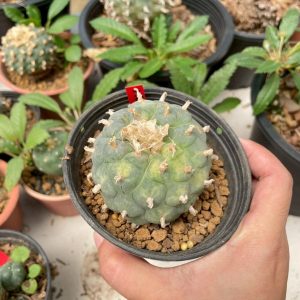
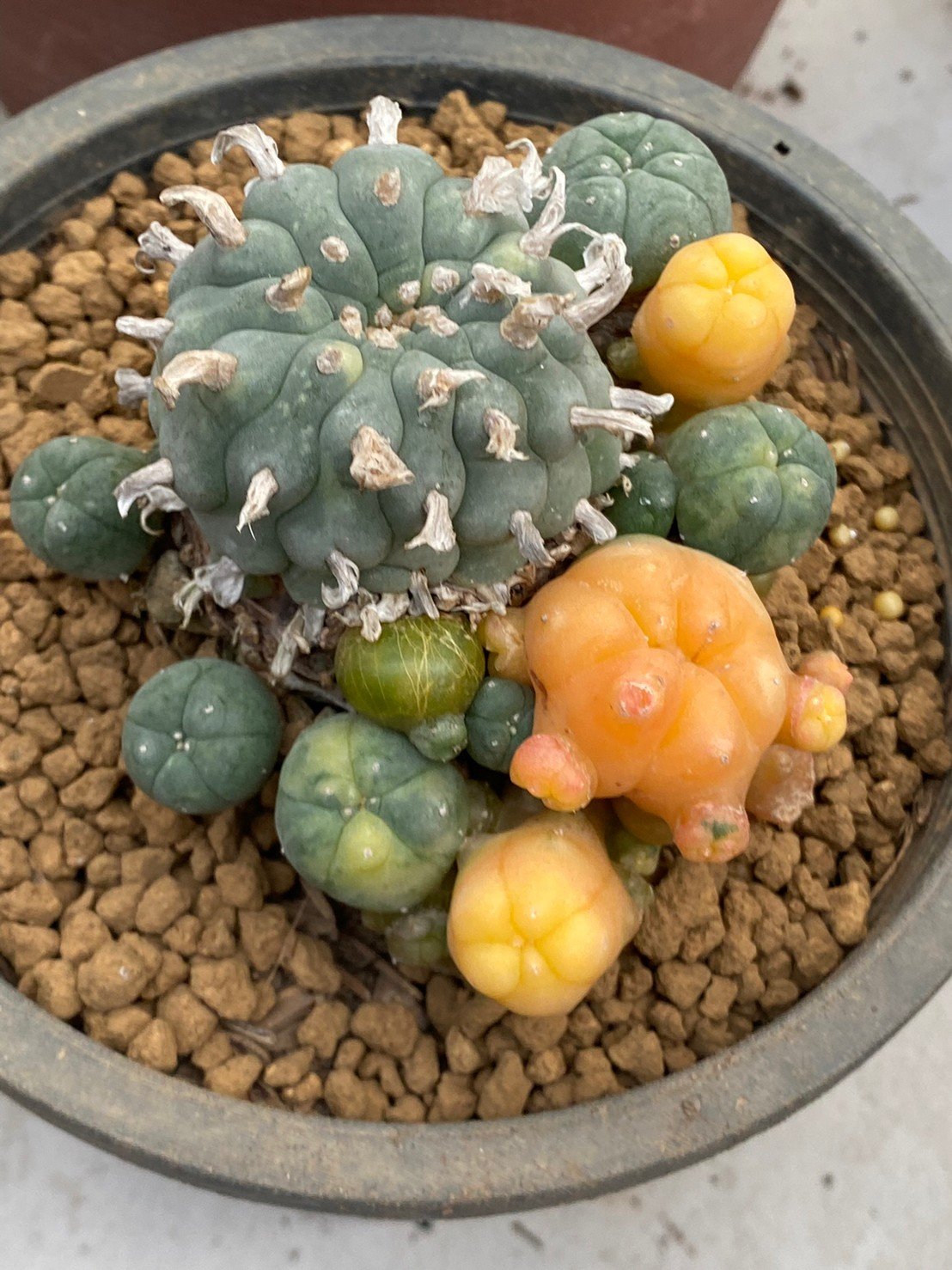
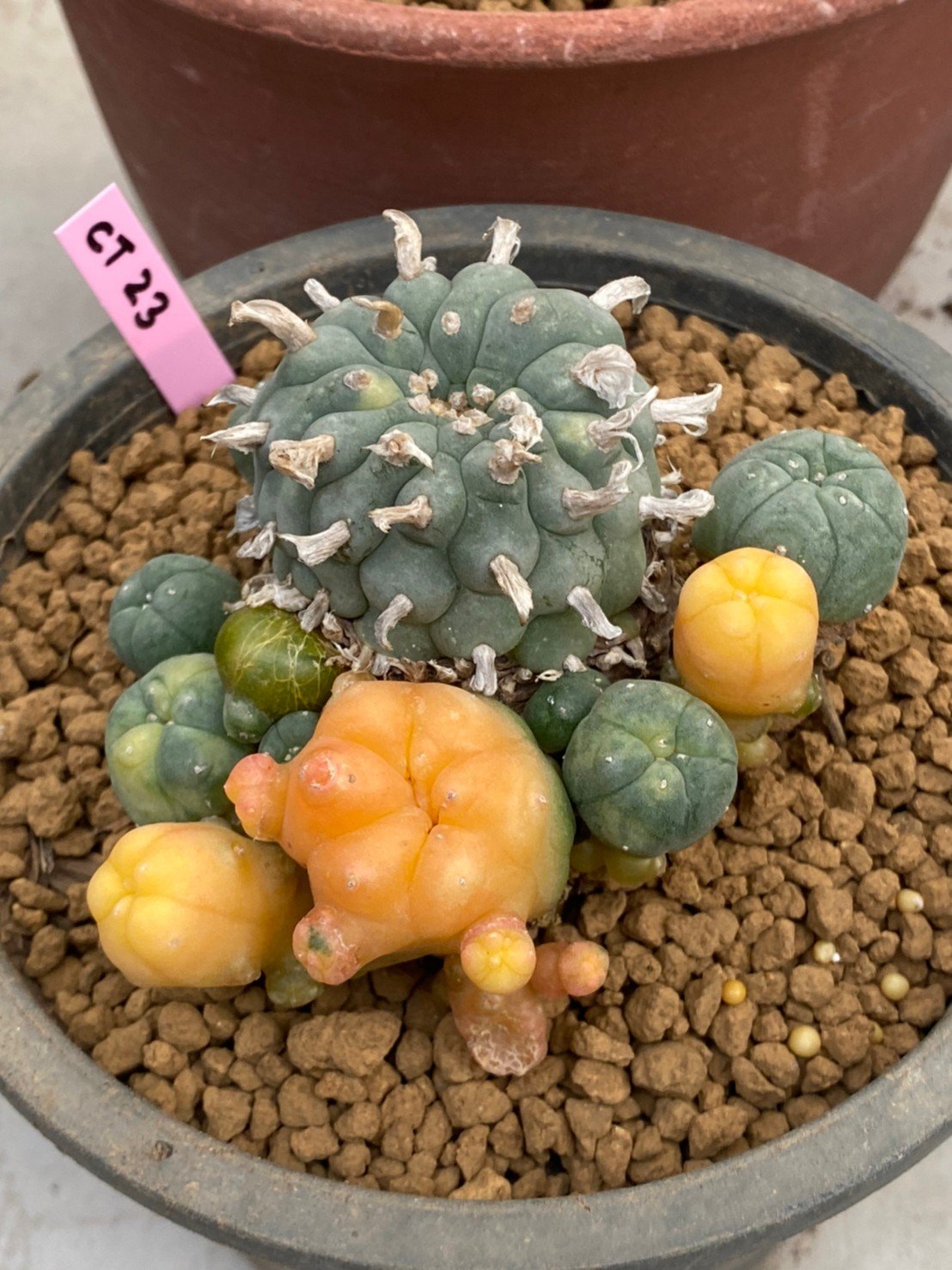
The Peyote (Lophophora williamsii Variegata) is one of the most remarkable and rare cacti in the botanical world. This particular specimen, 25 years old and 6–7 cm in diameter, has been carefully grown from seed on its own root, a mark of true authenticity and sustainable horticulture. Its natural, ungrafted development ensures longevity, strength, and the potential to bloom and produce seeds, continuing one of the most legendary cactus lineages known to humankind.
The Variegata form of Peyote distinguishes itself with a mesmerizing mosaic of colors. Instead of the traditional blue-green hue, it displays beautiful marbling in green, yellow, and cream, creating a naturally occurring work of art. Each plant is unique, a living sculpture shaped by time, genetics, and care.
The Artistry of Variegated Growth
Variegated cacti are prized among collectors for their distinctive pigment mutations that form streaks, patches, and gradients across the surface. In the case of Lophophora williamsii Variegata, the marbled coloration appears as if hand-painted by nature. No two variegated Peyote plants are ever identical, making each specimen truly one-of-a-kind.
With 25 years of slow, seed-grown development, this Peyote embodies the patience and devotion required in desert plant cultivation. Its ability to flower and set seed reflects a mature, thriving plant with exceptional vitality, a feature few cultivated specimens ever achieve.
Botanical and Ecological Importance
The Lophophora genus holds an important place in the study of desert botany and ethnobotany. Native to the arid regions of northern Mexico and southwestern Texas, Peyote is a small, spineless cactus that has adapted to survive in extreme climates through water retention and slow metabolic growth. Its longevity makes it a living record of ecological endurance.
Cultivation guidelines for sustainable Peyote growth:
-
Substrate: Mineral-rich, free-draining soil (pumice, sand, limestone).
-
Light: Bright but indirect sunlight for balanced coloration.
-
Water: Minimal, with complete drying between waterings.
-
Temperature: Warm desert-like conditions, ideally 20–35°C (68–95°F).
-
Propagation: Preferably from seed for maintaining genetic diversity.
Cultivating seed-grown Peyote contributes to conservation efforts by reducing demand for wild harvesting, which threatens natural populations.
Cultural and Historical Significance
For millennia, Peyote has been revered by Indigenous peoples, including the Huichol (Wixarika), Tarahumara, and members of the Native American Church. Within these traditions, Lophophora williamsii is regarded as a sacred and symbolic plant, representing healing, wisdom, and unity with the natural world.
The Variegata form adds another layer of meaning. Its dual coloration symbolizes balance and harmony, light and shadow, a visual metaphor for human growth and transformation. In educational and anthropological contexts, the plant offers insights into Indigenous ethnobotany, ritual symbolism, and cultural preservation.
Conservation and Ethical Cultivation
Because wild Peyote populations are endangered due to overharvesting and habitat destruction, cultivating seed-grown plants is vital for sustainability. This 25-year-old specimen, grown responsibly from seed, supports ethical horticultural practices and the preservation of Lophophora biodiversity.
Benefits of ethical cultivation include:
-
Supporting conservation over collection.
-
Protecting Indigenous ecological heritage.
-
Maintaining genetic diversity in cultivated Peyote.
-
Educating future generations about sustainable plant care.
Distinctive Features of Peyote Variegata
| Attribute | Description |
|---|---|
| Scientific Name | Lophophora williamsii var. Variegata |
| Common Name | Variegated Peyote |
| Family | Cactaceae |
| Age | 25 years |
| Size | 6–7 cm diameter |
| Growth Type | Seed-grown, own root (not grafted) |
| Form | Variegated – marbled patterns of green, yellow, and cream |
| Flowering | Capable of producing small pink-white flowers |
| Seed Production | Mature enough to yield seeds |
| Rarity | Highly prized among cactus collectors and educators |
Educational and Symbolic Value
The Lophophora williamsii Variegata is not only a collector’s gem but also a profound educational specimen. It teaches patience, respect for natural cycles, and the importance of biodiversity conservation.
Its unique variegation serves as a botanical lesson in mutation and adaptation, while its historical context offers a window into ancient Indigenous plant knowledge.
For students, collectors, and researchers alike, this cactus is an emblem of cultural continuity, scientific curiosity, and spiritual symbolism within the natural world.
Conclusion
The Peyote (Lophophora williamsii Variegata), 25 years old, seed-grown, and cultivated on its own root, represents an extraordinary blend of nature, art, and heritage. Its stunning variegated design, mature flowering stage, and sustainable origin make it a benchmark specimen for botanical education, cultural preservation, and ethical cultivation.
Whether displayed in a botanical collection, used for academic study, or admired for its natural beauty, this Peyote embodies the timeless relationship between humans and sacred desert flora, a living testament to resilience, transformation, and respect for nature.