
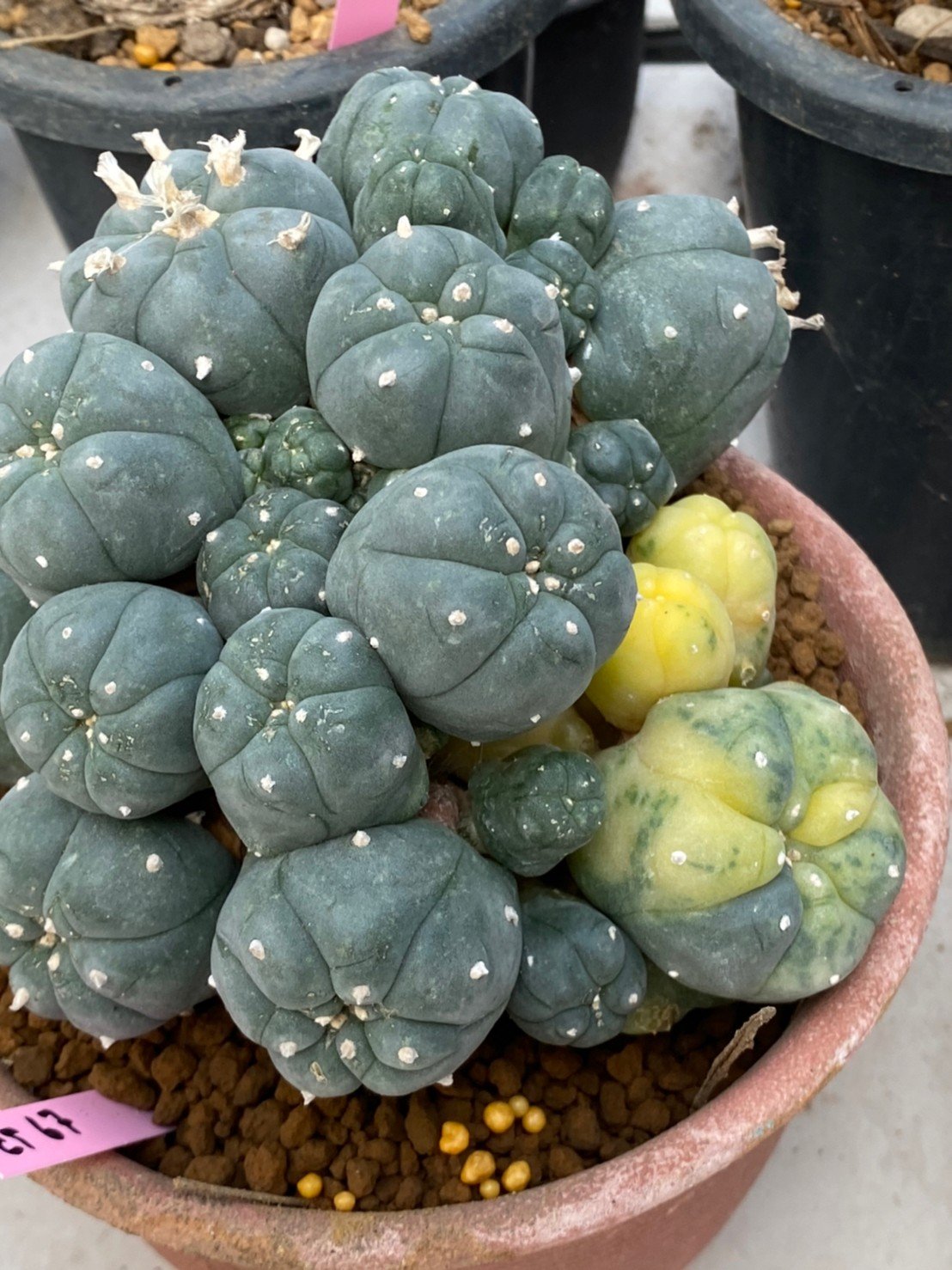
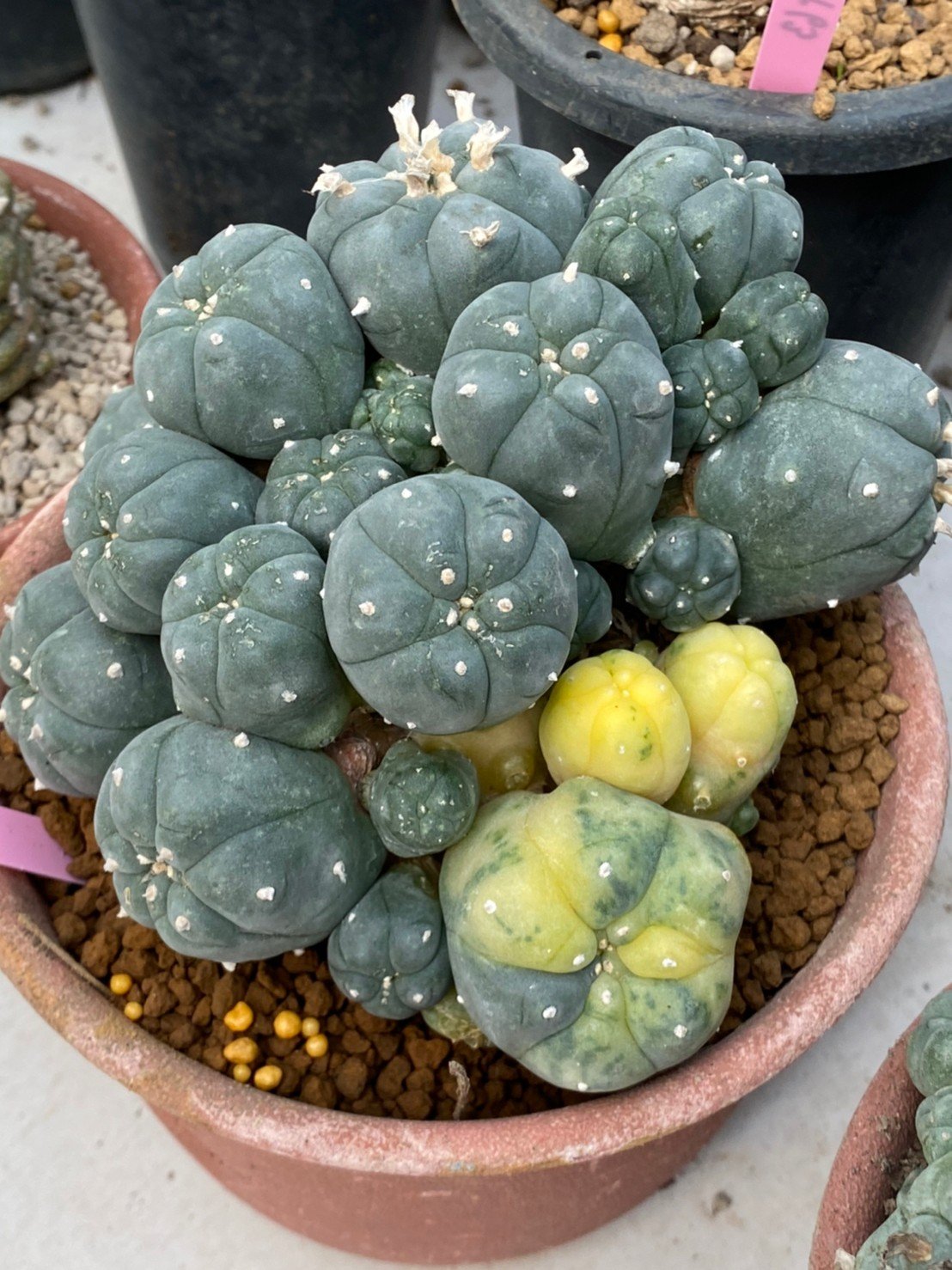
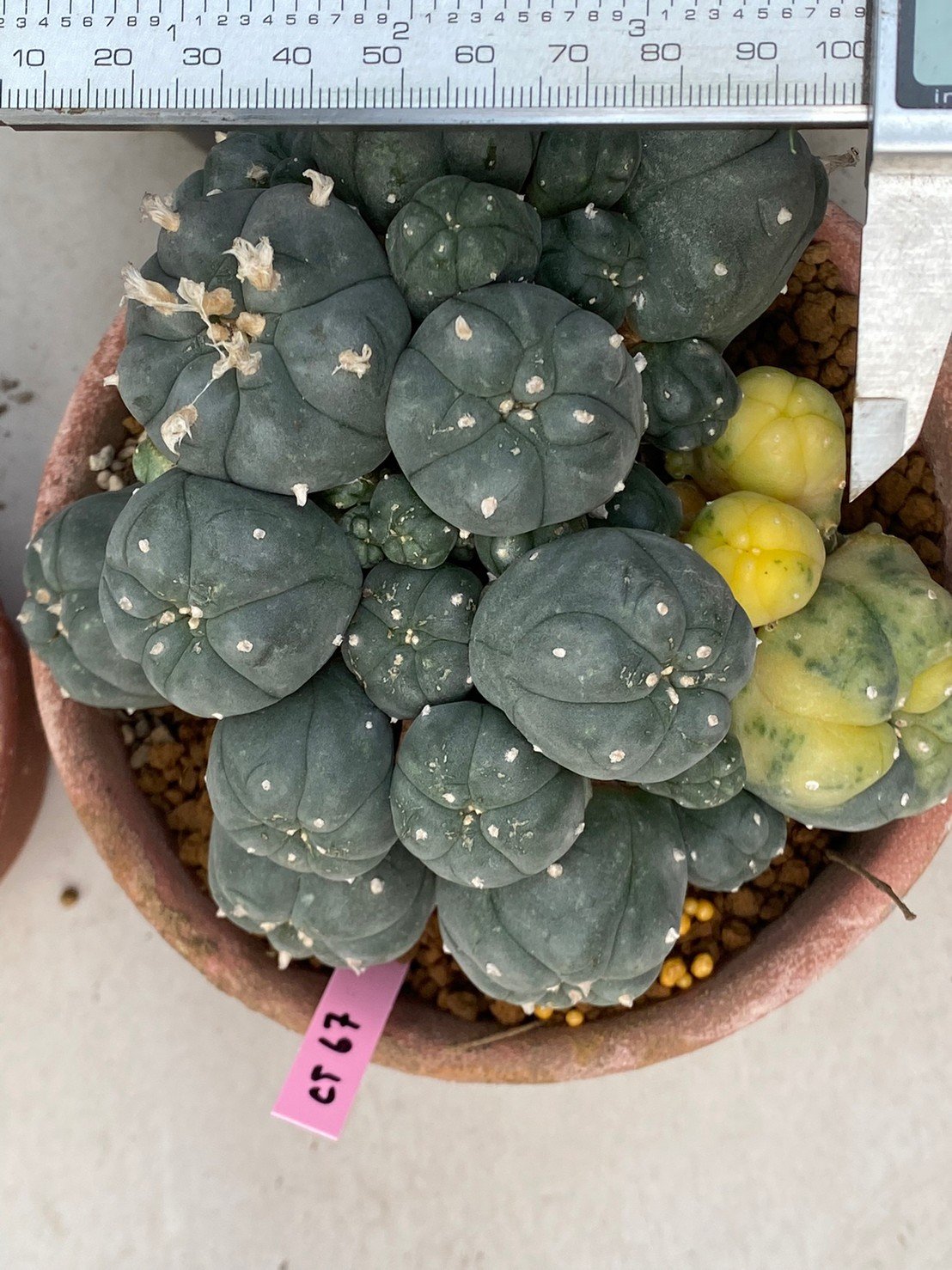
Description
Lophophora williamsii variegata: The 18-Year-Old Desert Masterpiece
Meta Title
Lophophora williamsii variegata – 18-Year-Old Peyote Cactus | History, Cultivation & Care
Meta Description
Discover the rare Lophophora williamsii variegata, an 18-year-old, seed-grown cactus admired for its vibrant variegation, longevity, and cultural heritage. Learn its history, form, and care in this detailed educational guide.
Introduction: A Living Symbol of Time and Beauty
The Lophophora williamsii variegata, commonly called the Variegated Peyote cactus, stands among the most visually striking and scientifically fascinating members of the Cactaceae family.
This 18-year-old, 8–10 cm specimen represents more than just a plant: it’s a living archive of nature’s patience, artistry, and endurance.
Over nearly two decades, it has matured into a beautifully balanced form displaying rare marbling of green, yellow, and cream tones. Each variegata specimen is unique, shaped by time, light, and the subtle chemistry of its genetic patterning.
Grown ethically from seed on its own roots, this cactus exemplifies authenticity, longevity, and sustainable cultivation, making it one of the most prized plants for serious collectors, educators, and botany enthusiasts alike.
Botanical Overview
| Category | Details |
|---|---|
| Scientific Name | Lophophora williamsii variegata |
| Family | Cactaceae |
| Common Name | Variegated Peyote |
| Native Habitat | Chihuahuan Desert, Mexico & Southern Texas |
| Form | Globular, spineless, slow-growing |
| Average Size | 8–10 cm diameter (at 18 years) |
| Root System | Taproot, own-rooted |
| Distinctive Feature | Variegated marbling of green, yellow, and cream |
| Flower Color | White to pale pink |
Unlike grafted cacti that mature quickly, this seed-grown Peyote develops naturally, mirroring its wild counterparts. The result is a plant that captures the true genetic and morphological integrity of the species.
The Science of Variegation
What Is Variegation?
Variegation refers to the uneven distribution of chlorophyll in plant tissues. Areas lacking chlorophyll appear yellow, cream, or even white, creating visually dramatic streaks or patterns.
In Lophophora williamsii variegata, this occurs naturally, either through spontaneous genetic mutation or during early seedling development. The contrast between green and yellow pigment zones makes each plant a biological artwork.
Why Variegated Peyote Is Rare
True variegation is uncommon because it can reduce photosynthetic efficiency, causing slower growth. Over 18 years, this cactus’s survival and maturity reflect exceptional balance between resilience and rarity.
Symbolic Interpretation
In horticultural symbolism, variegation represents harmony in diversity, a metaphor for unity between light and life, endurance and fragility. Collectors often view it as an emblem of patience and transformation.
Morphology and Structure
The Lophophora williamsii variegata differs subtly from its non-variegated relatives:
-
Body: Rounded and ribbed, with smooth, spineless tissue.
-
Coloration: A marbled mosaic of emerald, sage, gold, and ivory tones.
-
Surface Texture: Velvety and matte, often dusted with natural wax to minimize water loss.
-
Areoles: Small woolly tufts spaced along subtle ribs, where flowers emerge annually.
-
Flowers: Tiny, delicate blooms in pale pink or white, appearing during the warm season.
The visual result is a harmonious composition, soft, sculptural, and distinctly alive.
The Journey of an 18-Year-Old Specimen
Growing a Lophophora williamsii variegata from seed to maturity requires remarkable patience. Each year contributes only a few millimeters of growth.
Over 18 years, this plant has transitioned through numerous natural cycles, emerging from a seedling, forming its first ribs, then maturing into a stable, flowering adult. Its surface bears subtle marks of time, telling a story of endurance and adaptation.
Collectors often regard such mature, own-rooted plants as “living heirlooms”, cherished for both their age and authenticity.
Cultural and Historical Context
Indigenous Reverence
The Lophophora genus has long been recognized by Indigenous peoples of Mexico and the American Southwest as a sacred element of desert ecology. The plant symbolizes endurance, continuity, and the interconnectedness of all living things.
While modern enthusiasts primarily value the cactus for its botanical and ornamental appeal, it remains a respectful symbol of the ancient bond between humanity and the desert landscape.
Modern-Day Appreciation
Today, the variegated form is admired in botanical circles for its:
-
Exceptional rarity.
-
Genetic interest (studied in research on pigment mutations).
-
Role in conservation and propagation projects.
Ethically cultivated specimens like this one play a crucial role in protecting wild populations, helping to preserve biodiversity through sustainable propagation.
Flowering and Seed Production
Flowering Stage
At 18 years old, this Peyote has reached full flowering maturity. Its soft pink-white blossoms appear near the crown, emerging from woolly areoles.
Each bloom lasts a few days, followed by the development of a small fruit capsule containing glossy black seeds. These seeds are essential for conservation efforts, allowing for controlled, ethical propagation.
Educational Value
In botanical studies, flowering Lophophora specimens provide insight into pollination ecology, seed dispersal, and the impact of age on reproductive success in desert flora.
Cultivation and Care
The Lophophora williamsii variegata thrives when given care that mimics its native desert habitat.
Soil
Use a gritty, mineral-rich substrate—a mix of pumice, perlite, and coarse sand. Avoid organic-rich soils that retain moisture.
Watering
Follow the “soak and dry” principle: water deeply, then wait for the soil to dry completely before the next watering. Overwatering can lead to root rot.
Light
Provide bright, filtered sunlight to enhance color contrast while preventing sunburn on lighter variegated sections.
Temperature
Optimal range: 18–30°C (65–86°F). Avoid exposure to frost or high humidity.
Feeding
Feed lightly during the growing season with a low-nitrogen cactus fertilizer. Discontinue feeding during winter dormancy.
Potting
A shallow, wide container supports its taproot system. Use terracotta pots with ample drainage holes to ensure aeration.
Propagation and Conservation
Ethical cultivation of Lophophora williamsii variegata helps reduce the demand for wild-harvested plants.
Propagation Methods
-
Seed Propagation: The most sustainable approach, preserving genetic integrity.
-
Division of Offsets: Mature plants may occasionally produce small pups.
-
Controlled Pollination: Encourages seed production for conservation and research.
Conservation Ethics
-
Always source plants from certified, ethical growers.
-
Avoid removing plants from natural habitats.
-
Support conservation projects and botanical education initiatives.
This approach ensures that the beauty of Lophophora species can be appreciated for generations to come.
The Variegated Peyote as Living Art
Each variegated Peyote is entirely distinct, blending the precision of biology with the unpredictability of art.
Collectors often liken their surfaces to desert mosaics, where light, pigment, and geometry converge in living form. Photographers and botanical illustrators frequently feature Lophophora variegata as a subject for its organic patterns and meditative symmetry.
In this way, the cactus becomes not only a horticultural treasure but also a symbol of stillness, creativity, and patience.
Why This 18-Year-Old Specimen Is Remarkable
Age & Maturity: 18 years of slow, natural growth.
Flowering Stage: Fully capable of seasonal blooming.
Seed-Grown Authenticity: Cultivated ethically on its own roots.
Unique Variegation: Irreplaceable marbling patterns.
Botanical Rarity: Represents a stable, mature variegated line.
Ethical Value: Grown sustainably, contributing to species preservation.
This specimen is a living archive of time and care, embodying the ideals of patience and respect for the natural world.
Educational Importance
The Lophophora williamsii variegata serves as an invaluable teaching tool in several fields:
-
Botany: Illustrating pigment variation and desert plant adaptations.
-
Ecology: Demonstrating long-term desert survival strategies.
-
Conservation Science: Showcasing sustainable cultivation practices.
-
Cultural Studies: Representing the intersection between tradition and environmental stewardship.
By studying such mature specimens, students and researchers gain a tangible understanding of biodiversity, climate resilience, and horticultural ethics.
Conclusion: A Testament to Time, Patience, and Beauty
The 18-year-old Lophophora williamsii variegata exemplifies the union of science, art, and nature. Each year of its growth tells a quiet story of balance, between color and chlorophyll, drought and bloom, stillness and renewal.
For educators, conservationists, and collectors, it stands as a living reminder of nature’s artistry and endurance. In a world of rapid change, this slow-growing cactus teaches the virtues of patience, care, and respect for life’s intricate design.
![Peyote [Lophophora Williamsii] 7-8 cm 18 years old seed ownroot flower seedling](https://mr-cactuspeyote.us/wp-content/uploads/2025/10/IMG_6095-1-300x300.jpeg)
